From big to global cleanup
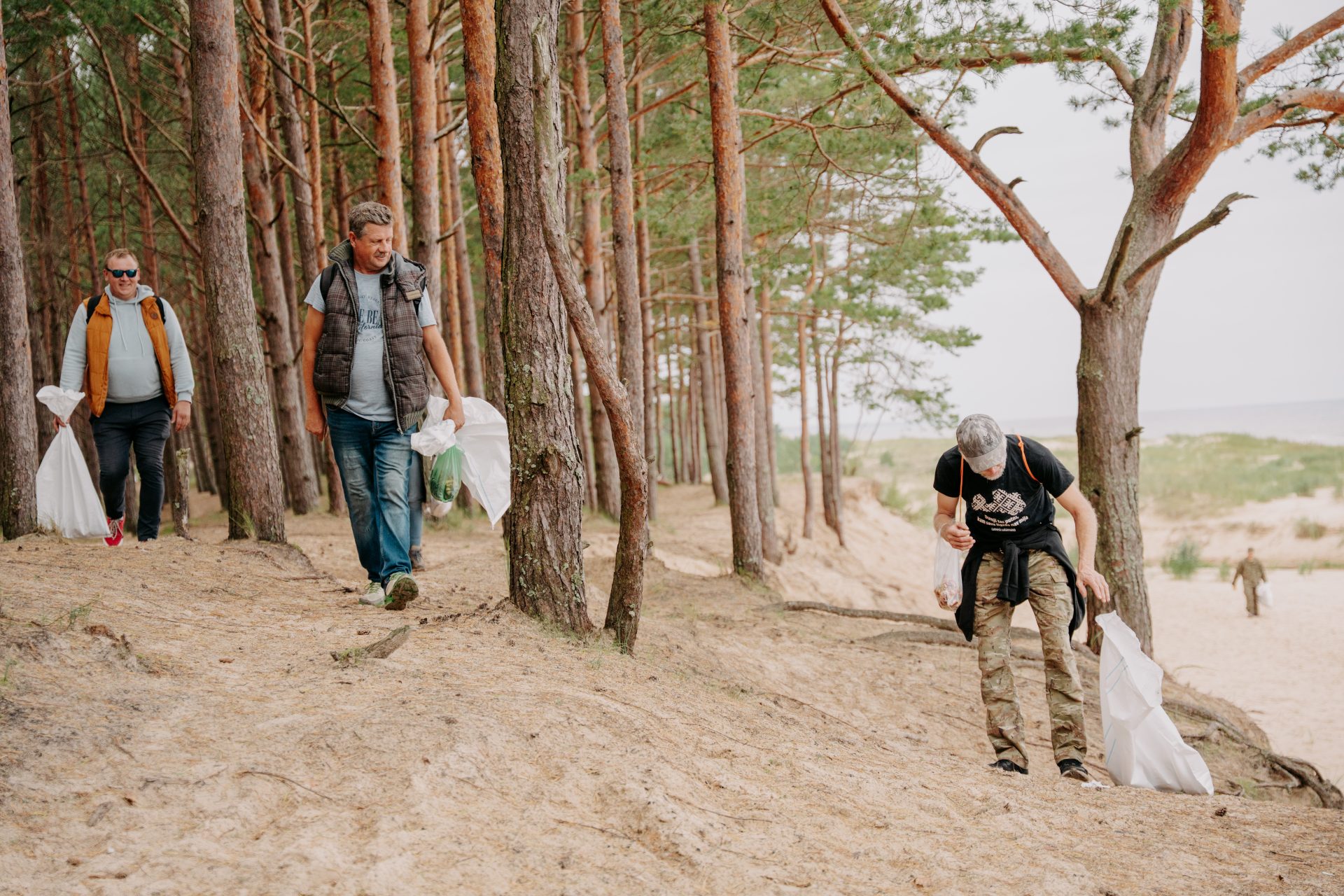
Over the course of 18 years, the Big Cleanup has engaged more than 2.3 million participants, cleaning 25 500 territories across the country. But for the organizers, it is not only the high level of participation that makes all the effort worthwhile. They have observed that many of the regular cleanup sites have become noticeably cleaner over time, with less or no waste to collect the following year.
If the first Big Cleanup focused primarily on removing litter, now, the emphasis has shifted more towards sustainability and environmental improvement. Some local talkas focus on planting trees and flowers in public spaces, while others involve volunteers in building park benches or nesting boxes. The initiative has even taken on a virtual dimension, encouraging people to delete unnecessary data and reduce their digital footprint.
Ten years after the first pan-Baltic clean-up, the movement went global. The first World Cleanup Day was organized in 2018 in Estonia, bringing together 18 million people across 158 countries. By 2025, an estimated 1.68% of the world’s population had taken part in cleanup activities, and September 20 is now recognized by the United Nations as World Cleanup Day. On this day, Latvia continues to set an example by planting Laimes koki, the future heritage trees, at sites across the country.
The Big Cleanup continues to inspire global action and break records, yet for the chief organiser, Vita Jaunzeme, there is still an important goal ahead. As she has noted to LSM once, the aim is to have talka recognized as a social, environmental, and cultural phenomenon of our people and included on the UNESCO Intangible Cultural Heritage Lists.
To learn more about the Big Cleanup and get involved, visit the official website: www.talkas.lv