Raimonds Pauls: Composer, Pianist, Maestro

10.03.2026

Comment (0)

© Ritvars Stankevičs

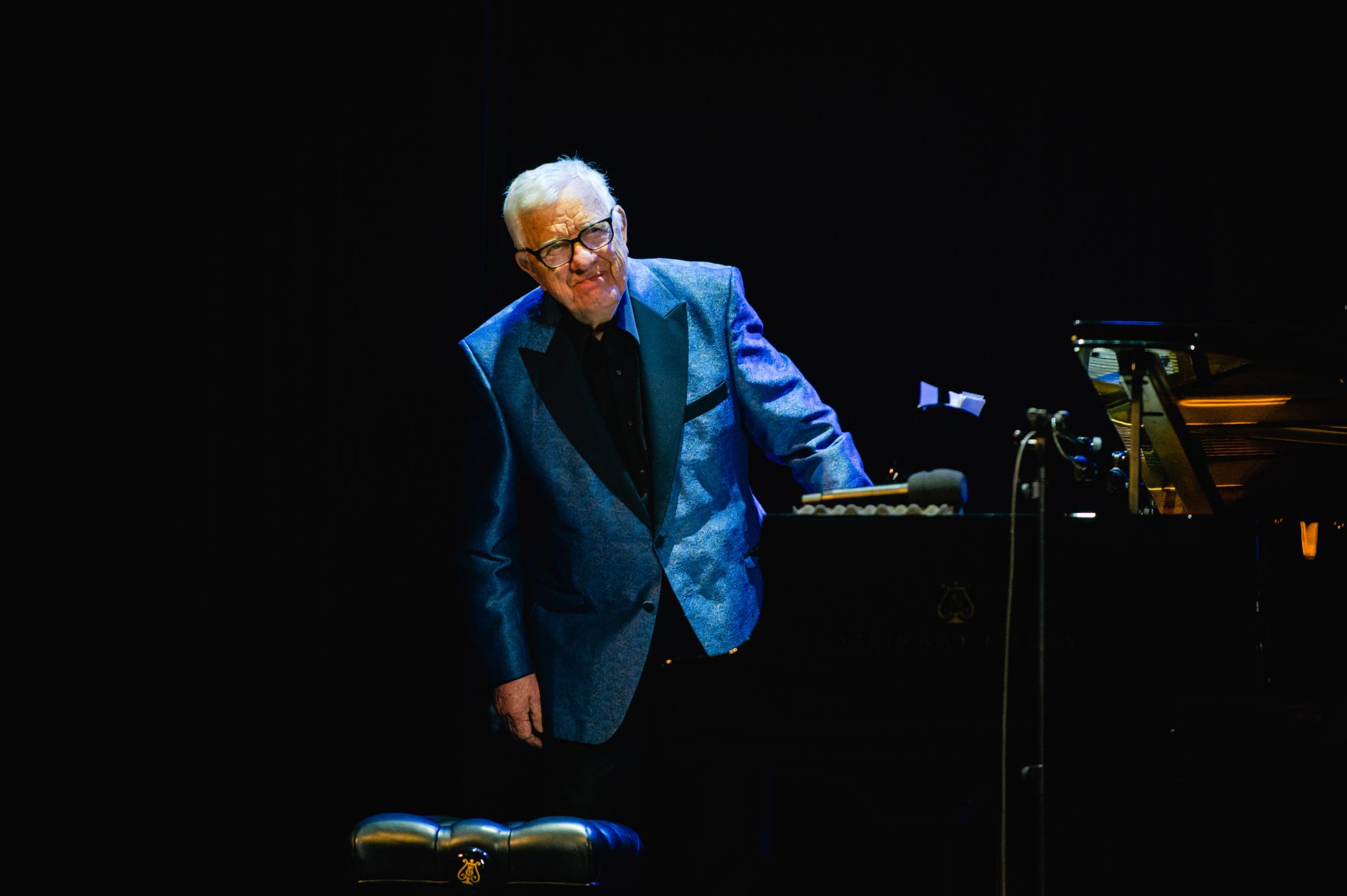
Ask any Latvian to name a typical Latvian song, and there’s a high chance they’ll mention one of the many pieces written by Raimonds Pauls. The one and only — a cultural icon, national treasure, and Maestro. One of Latvia’s most recognisable composers, known for his unbeatable sense of humour and extraordinary productivity.

As we celebrate Raimonds Pauls’ 90th birthday in 2026, let’s look back at his life and legacy, which we will continue to cherish for years to come.


First Steps into the World of Music

Raimonds Pauls was born on 12 January 1936 in Iļģuciems, Riga. Growing up in a working-class family, he was no stranger to hard work and was introduced to music by his father.

Pauls began studying piano at a very young age and quickly demonstrated exceptional musical ability. Years of dedicated practice soon translated into public performance: by the age of 14, he was already playing in restaurants and at local dance events.
0/5 (0 Reviews)

© Arnolds Auziņš

© Arnolds Auziņš

After graduating from the Emīls Dārziņš Secondary School of Music, Pauls continued his studies at the Latvian State Conservatory, where he further refined his skills as a pianist. He impressed teachers, audiences, and fellow musicians alike with his remarkable memory and unmatched improvisational talent.

Later, Pauls was encouraged to continue his academic studies and pursue a career as a solo pianist, but his heart was set on popular music. It was his strong foundation in classical music, combined with a deep interest in jazz, that shaped Pauls’ distinctive musical language, characterised by expressive melodies, strong rhythm, and emotional depth.


Birth and Rise of the Maestro

The late 1950s marked the beginning of Pauls’ professional career and the rapid rise of his public recognition. He was first known for his work with the Riga Light Music Orchestra, playing up to 170 concerts a year, and soon gained attention for his catchy compositions, which ultimately earned him the title of Maestro.

Pauls began composing music for theatre and writing songs that were loved far beyond the country’s borders. In 1968, “Mežrozīte” (“Eglantine”), a timeless hit, won the song poll of the radio show “Mikrofons”. Pauls went on to top the poll ten more times in a row with classics such as “Baltā saule” (“White Sun”) and “Mēmā dziesma” (“Speechless Song”), while many others also placed in the top five.

0/5 (0 Reviews)

© Ritvars Stankevičs

© Ritvars Stankevičs

Over the following decades, Maestro became one of the most influential composers of popular and stage music across the USSR and Europe. He played a key role in shaping the sound of his era and discovering new stars. Pauls was behind the creation of the vocal-instrumental ensemble Modo, which helped launch the careers of legendary singers Nora Bumbiere, Viktors Lapčenoks, Mirdza Zīvere, and Aija Kukule.

He has continued to spotlight young talent throughout his career, performing together with Normunds Rutulis, Marija Naumova, Ance Krauze, Kristīne Prauliņa, and Paula Saija. Pauls has also left a lasting impact on many other musicians.


0/5 (0 Reviews)

© Juris Pīlēns

© Juris Pīlēns

There are no borders when it comes to genres of music that Pauls could take on. Since the early days, he has been deeply involved in Latvian cinema, composing soundtracks for films that have become cultural classics, including “Vella kalpi” (The Devil’s Servants), “Teātris” (“Theatre”), and “Limuzīns Jāņu nakts krāsā” (“A Limousine the Colour of Midsummer’s Eve”), where his music added colour and lasting recognisability.

He has also written many children’s songs, often performed by the children’s vocal ensemble Dzeguzīte, and made contributions to choral music. His “Manai Dzimtenei” (“To My Homeland”), a collaboration with poet Jānis Peters, remains an integral part of the repertoire of the Latvian Song and Dance Festival.


Unbeatable legacy

Pauls has been an influential figure beyond music. He was active during Latvia’s national reawakening and later served as Minister of Culture and a member of the Saeima.

Over 800 songs, 300 instrumental pieces, music for more than 40 musical plays, and 30 film soundtracks — the legacy of Maestro is remarkable. And even at 90, Pauls continues to write music, perform live, and charm audiences with his humour.

0/5 (0 Reviews)

© Arnolds Auziņš

© Ritvars Stankevičs

While widely regarded in Latvia as a national treasure, Pauls’ contributions were officially reaffirmed in November 2025. He was awarded the Order of the Three Stars (Triju Zvaigžņu ordenis), 1st Class, Latvia’s highest state honour, in recognition of his extraordinary service to the nation’s culture.

0/5 (0 Reviews)
Comments (0)