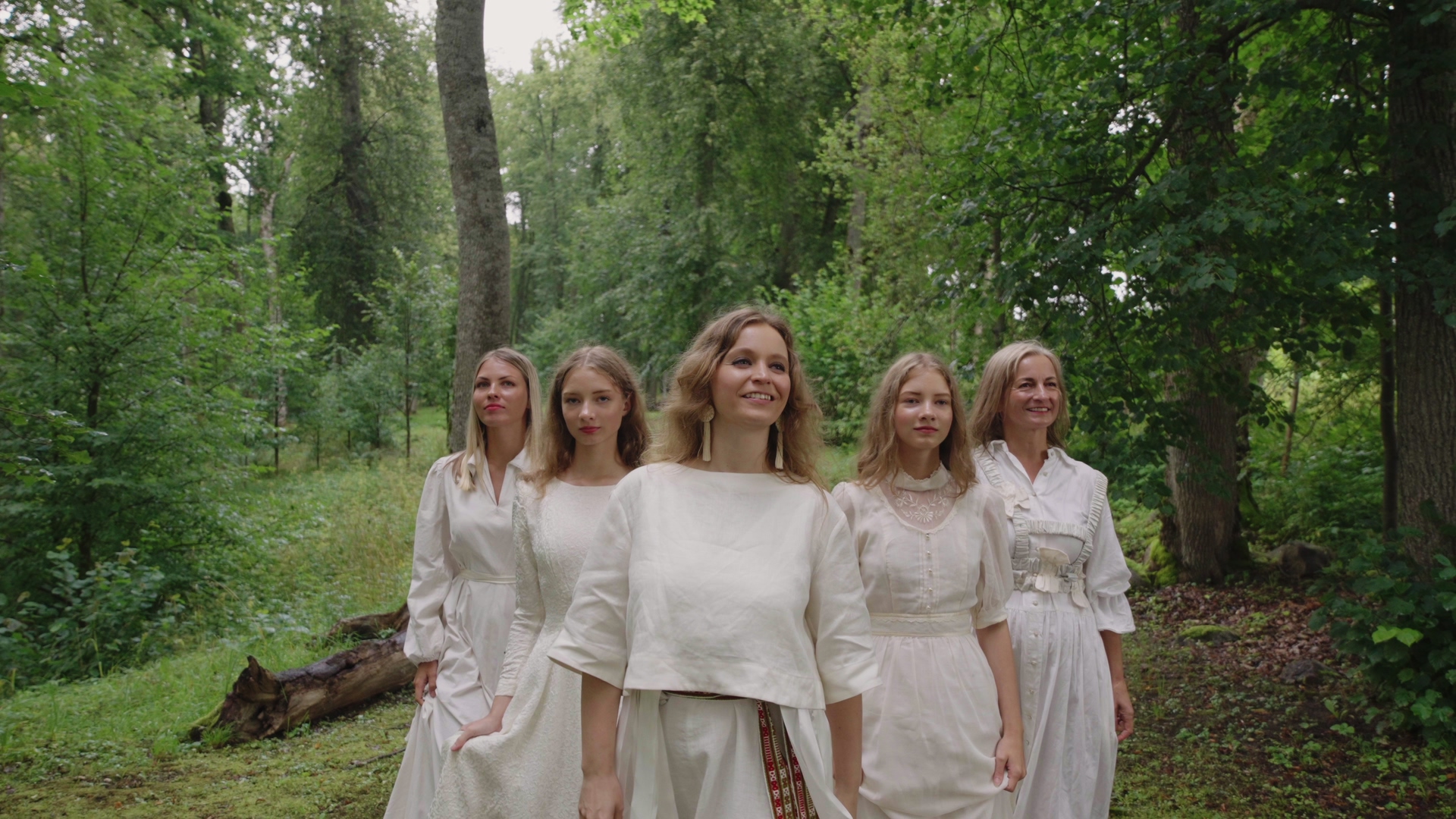
The successful New-York-based Latvian musician is reinventing Latvian folk songs.
What would ancient Latvian folk songs sound like if they wandered out into the world and started a conversation with other musical cultures? That’s the question Arta Jēkabsone, an award-winning Latvian jazz vocalist and composer, seems to explore on her new album “Dziesmu kamoliņš” (Garland of Songs). In 11 original arrangements, she reshapes these traditional melodies into something both fresh and undeniably Latvian.
You might think that after spending almost 10 years in New York, in a multicultural, English-speaking society, it would be easy to lose one’s identity. Arta, however, feels an increasing urge to preserve and nurture it with every passing year.
“I’m lucky to have such a diverse circle of friends and colleagues, because it helps me appreciate every culture and background. At the same time, it makes me value my own Latvian identity even more. It’s wonderful to find a common language, make music together, share our traditions, and sometimes even let them blend naturally. To understand how similar and yet different we are,” she says.
Her music carries this philosophy into the sound of “Dziesmu kamoliņš”. Take the ninth track, “Noriet saule vakarāi” (The sun sets in the evening), for example. It opens with bright, quick Moroccan percussion, and for the first twenty seconds you wouldn’t guess you’re anywhere near Latvian folk music. Then Arta’s voice enters. The old melody and the North African rhythm meet, creating something entirely new.