Preparation
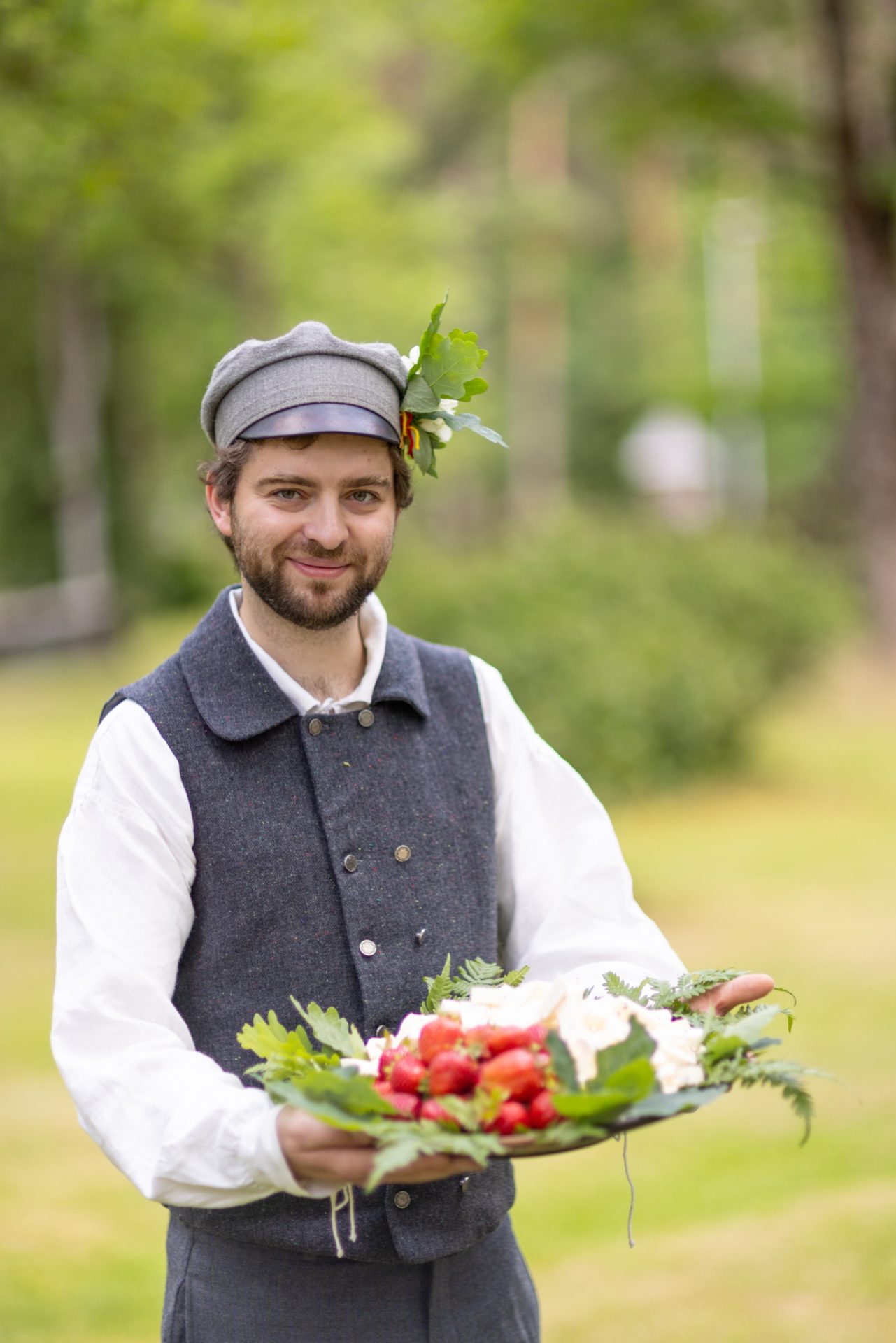
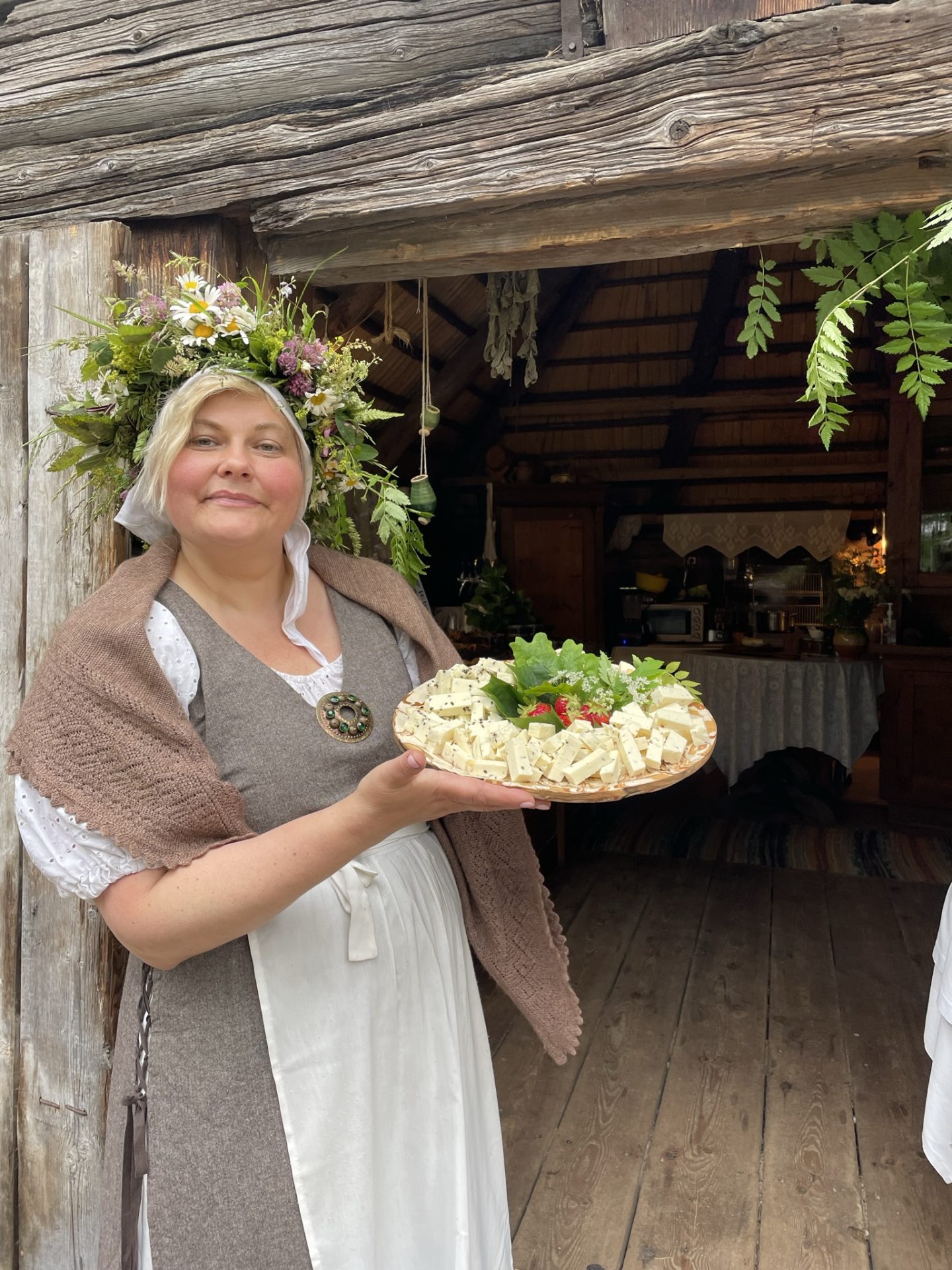
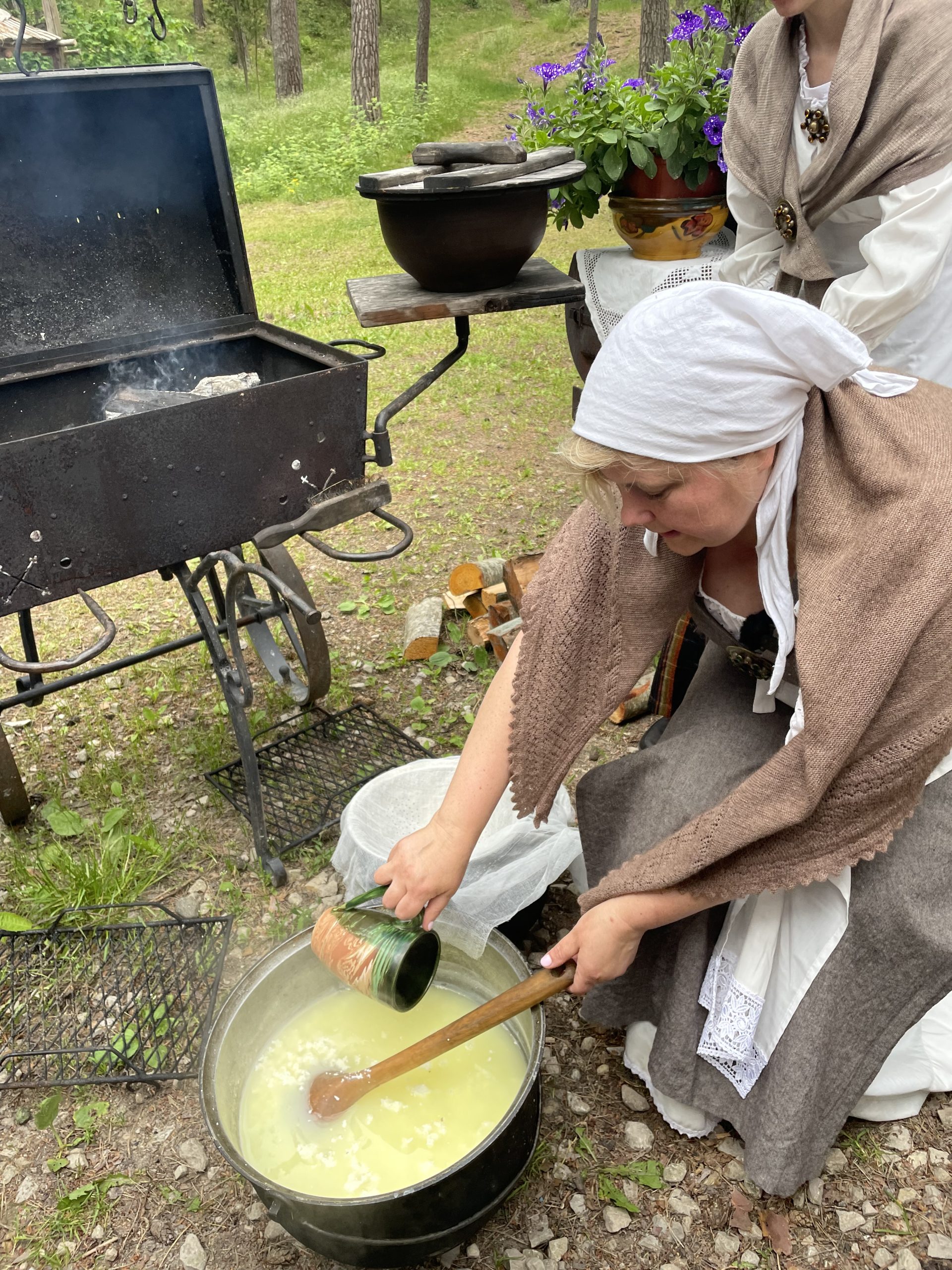
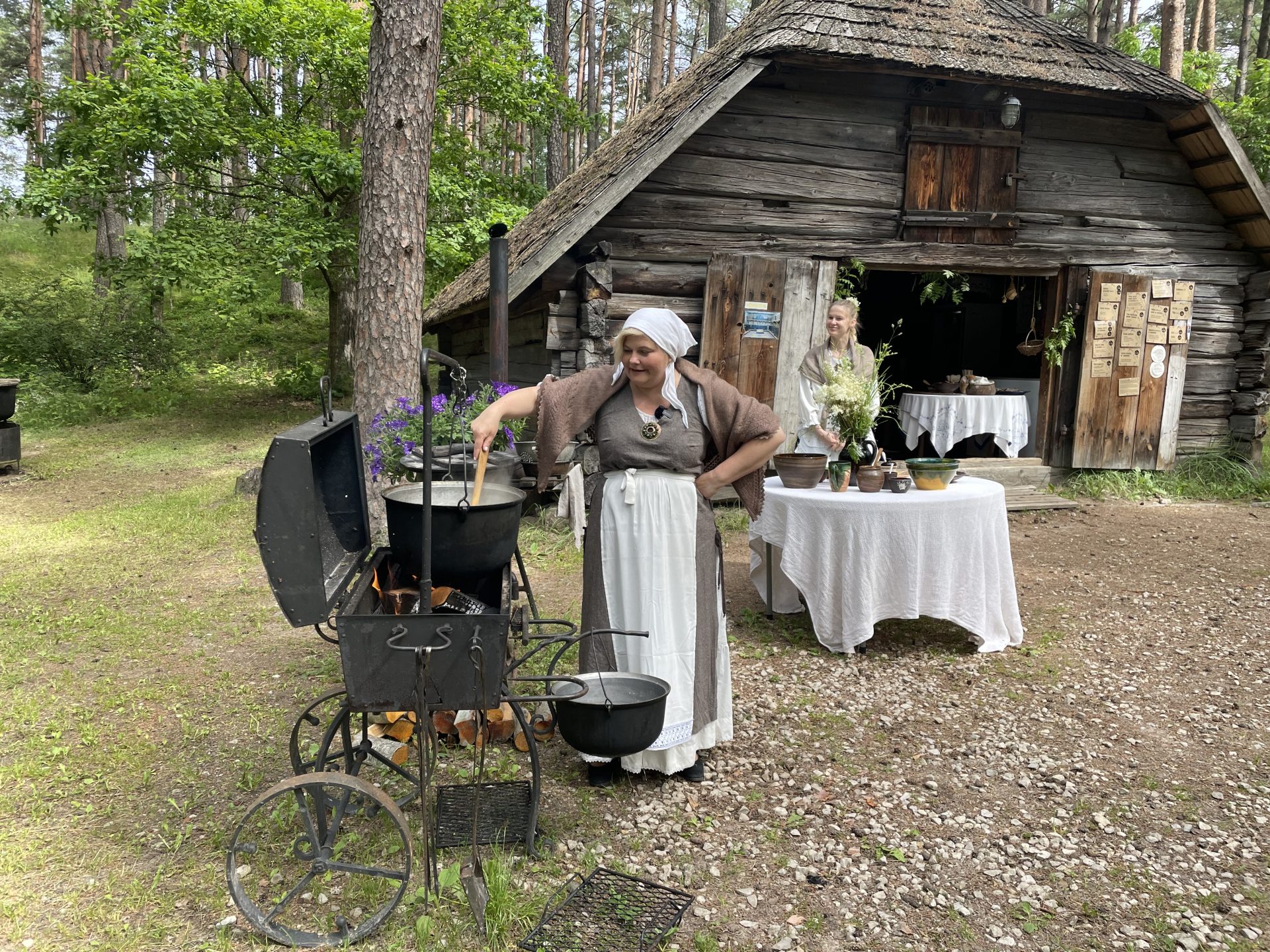
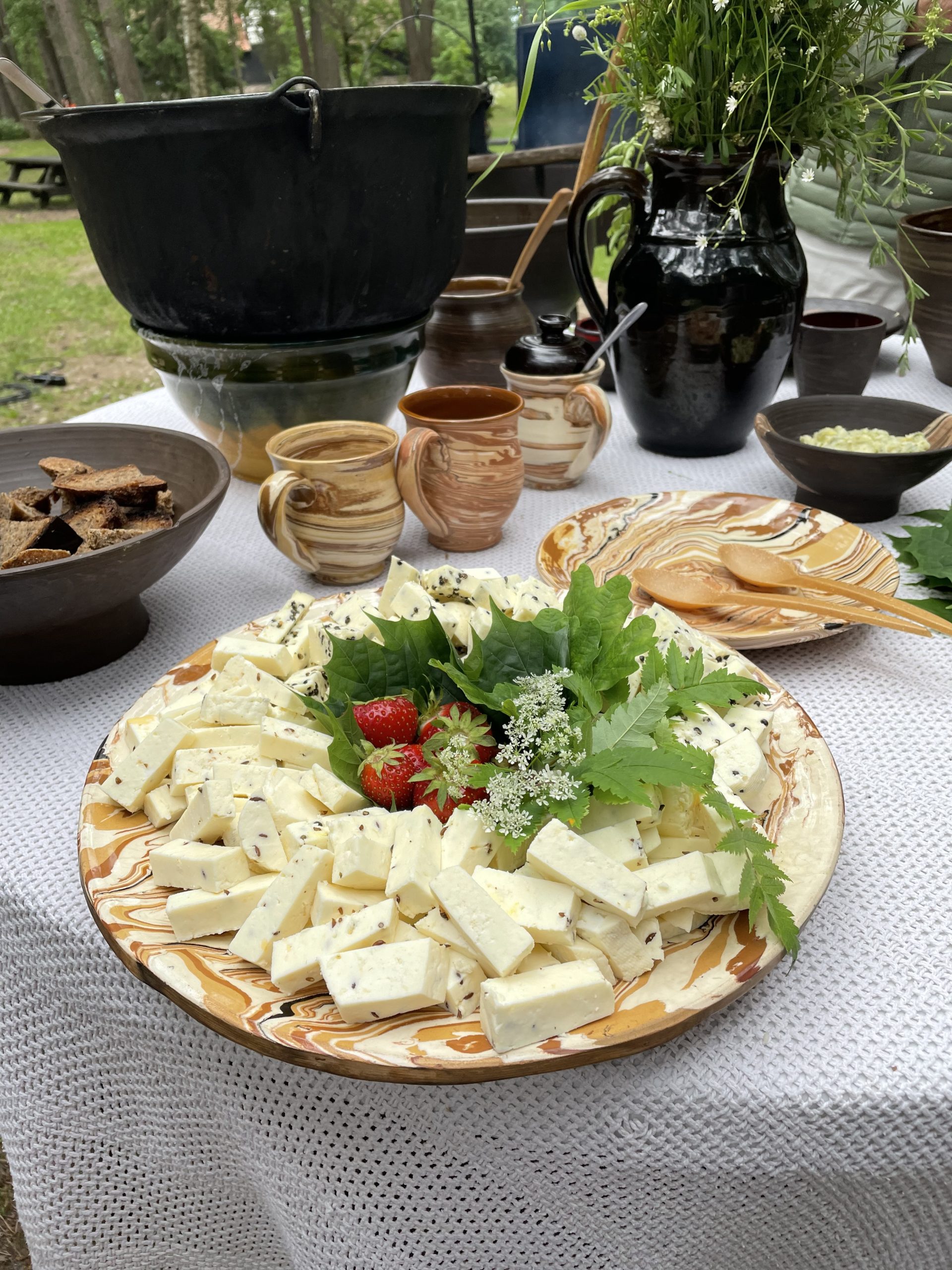
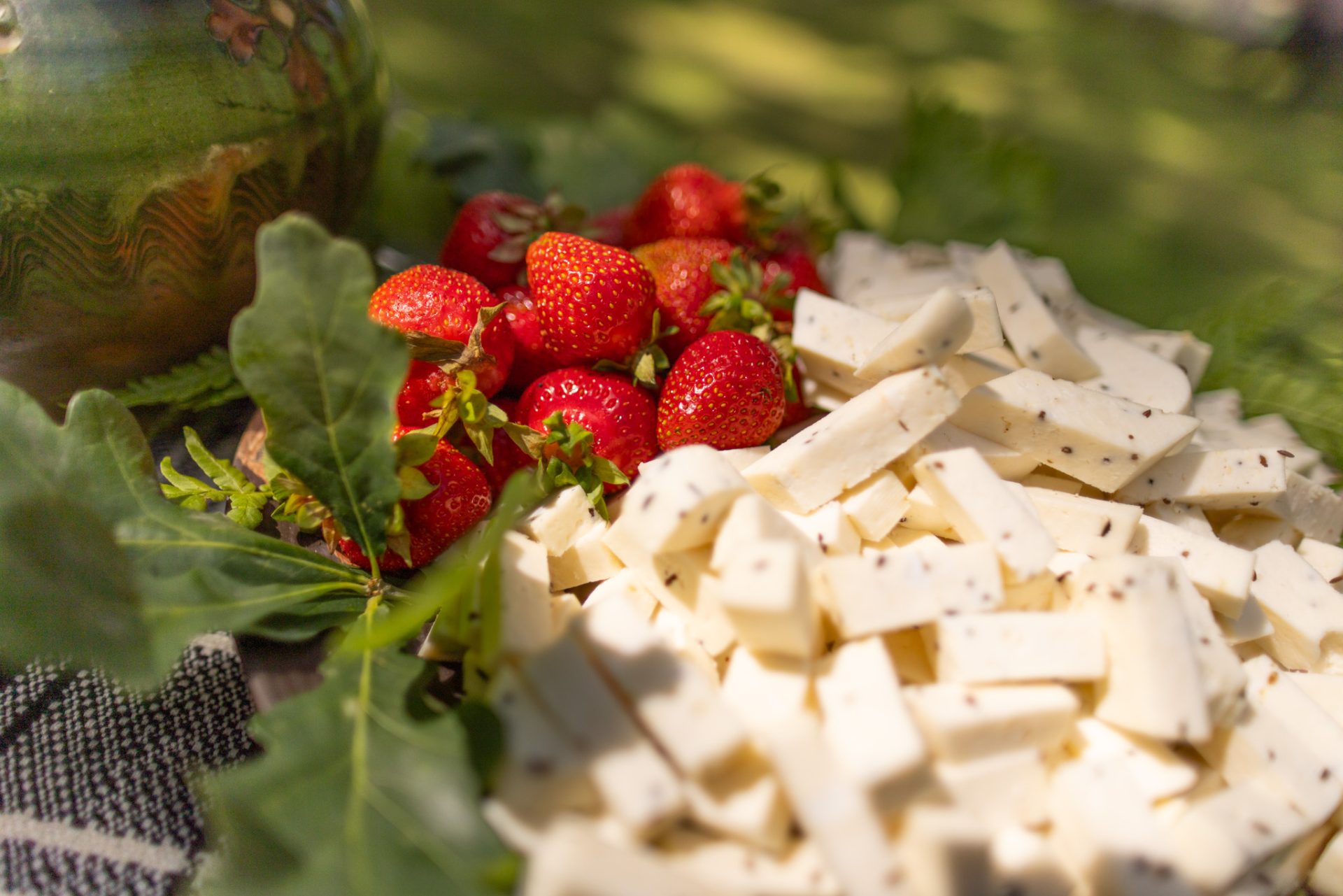
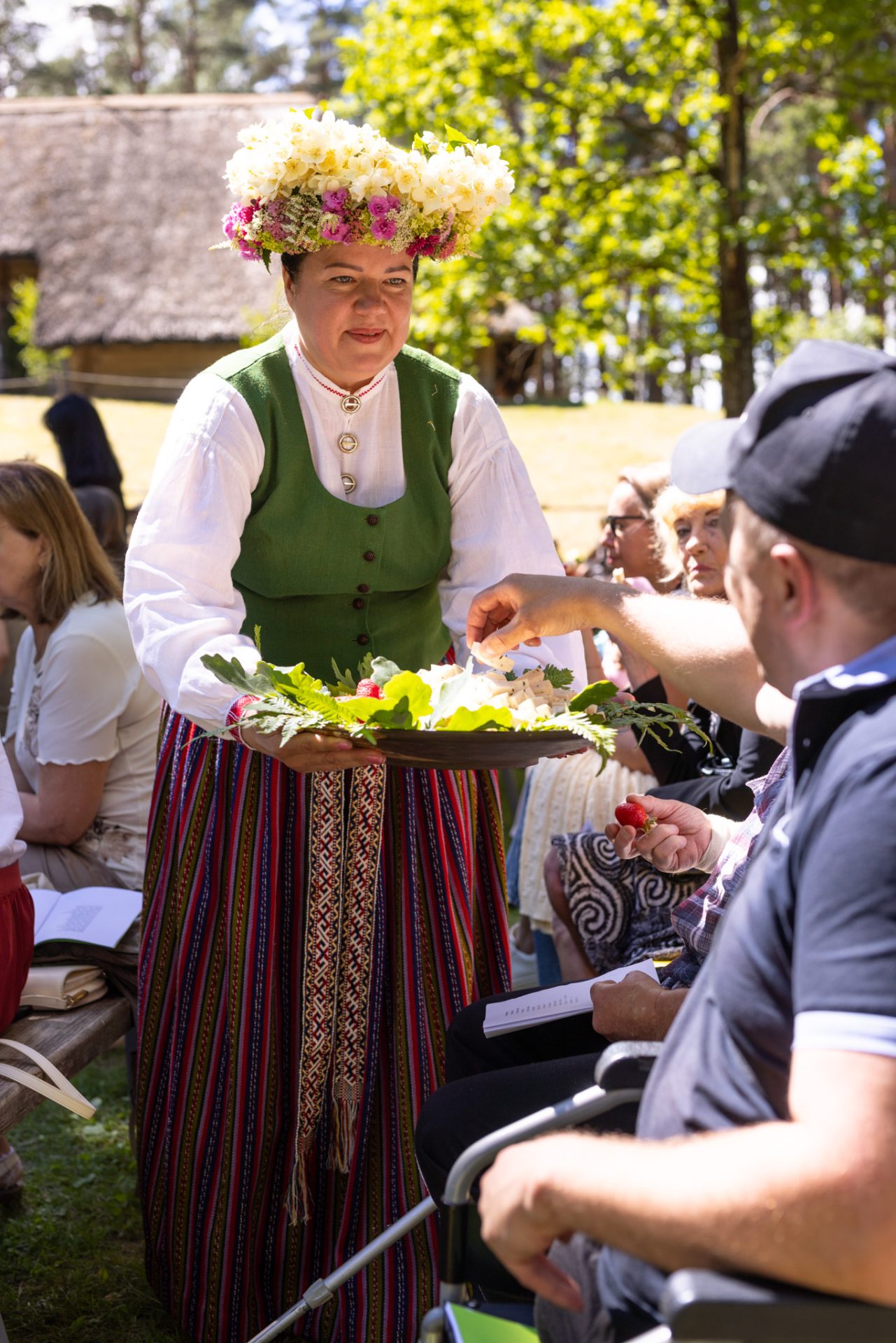
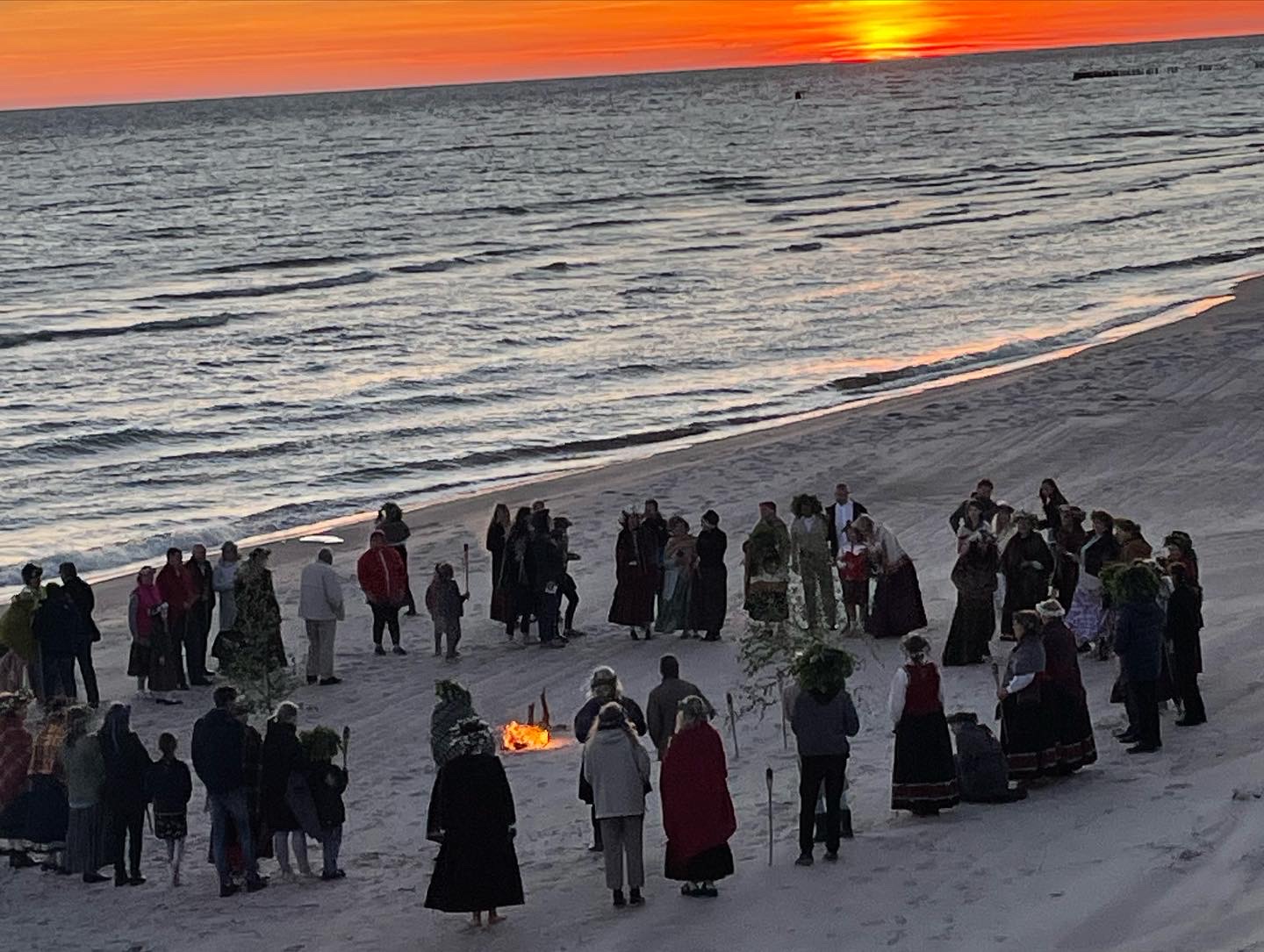
Hours before sunset, everyone is busy preparing for the celebration. In the kitchen, the hostess, Jāņa māte, together with their family and closest friends, prepares bacon buns, fresh bread, sweet pies, and countless other treats, along with homemade drinks and homegrown berries, for the long night ahead.
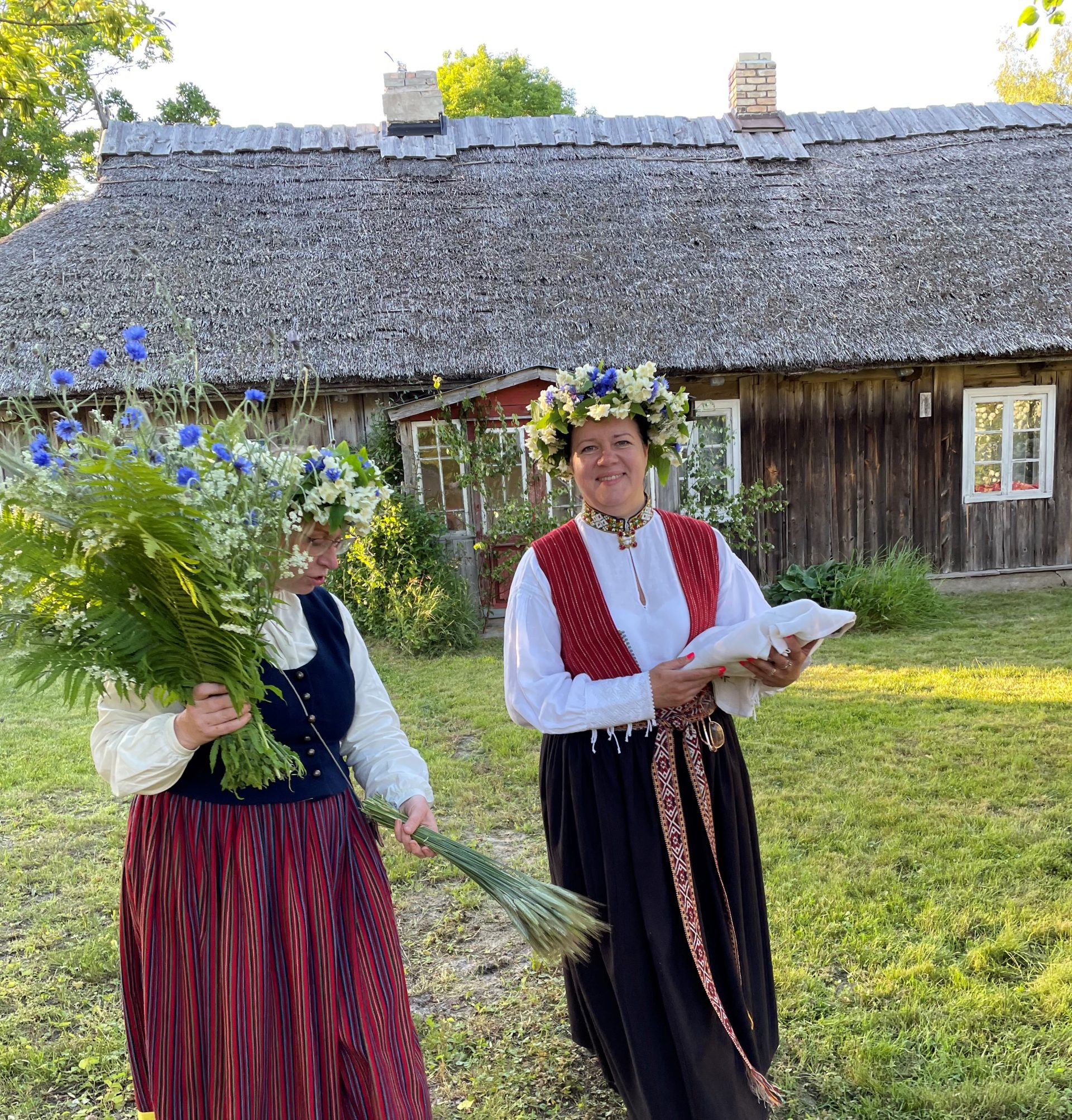
Nearby, women and girls gather wildflowers and ferns from fields and meadows to decorate the ritual grounds and sauna. It is also important to collect trejdeviņas zālītes—27 different plants—tie them together with red woolen thread and wear them around the waist throughout the night to protect against evil. All herbs are believed to possess extraordinary healing powers during the summer solstice, and plants such as common yarrow, peppermint, and St. John’s wort are gathered for herbal teas.
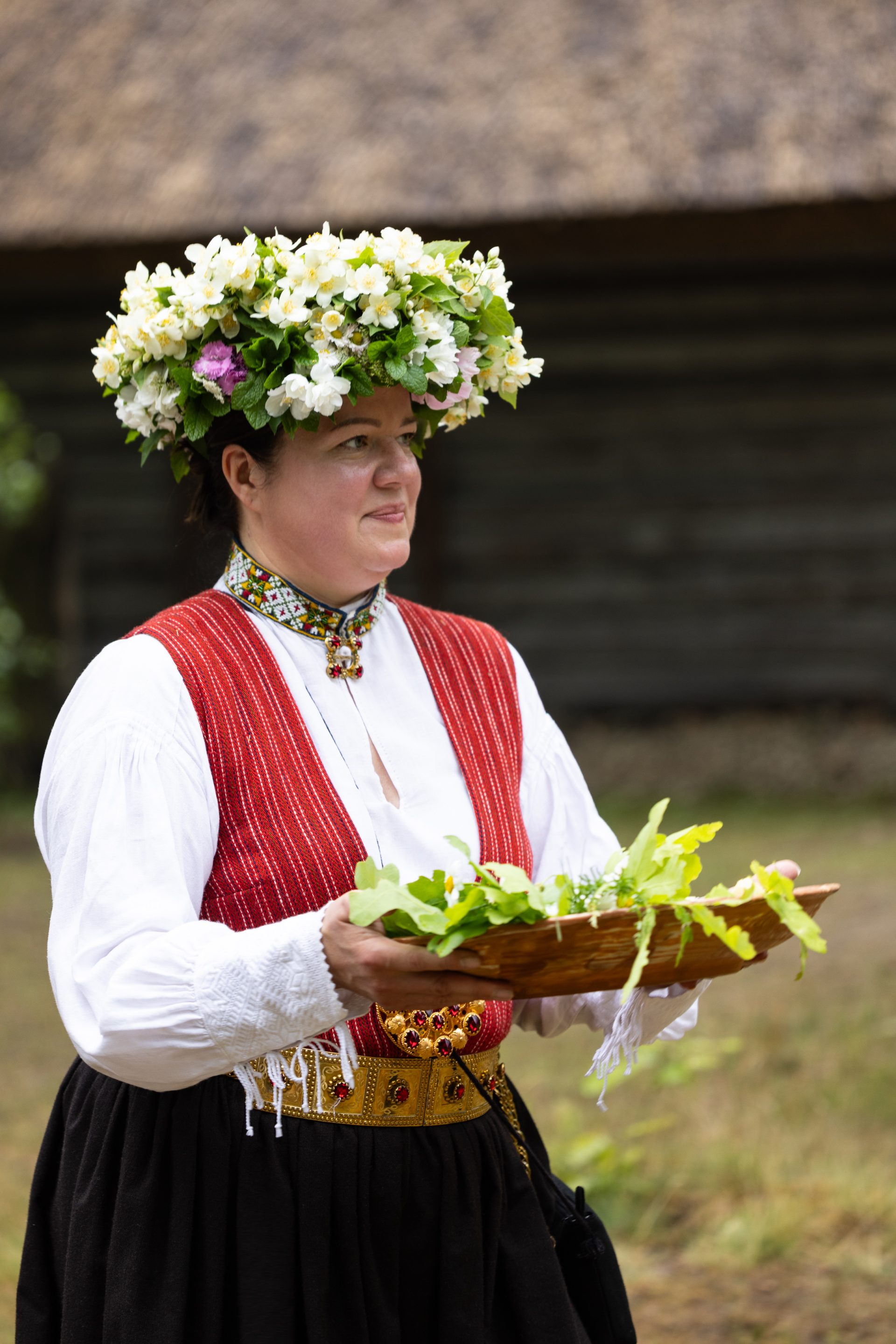
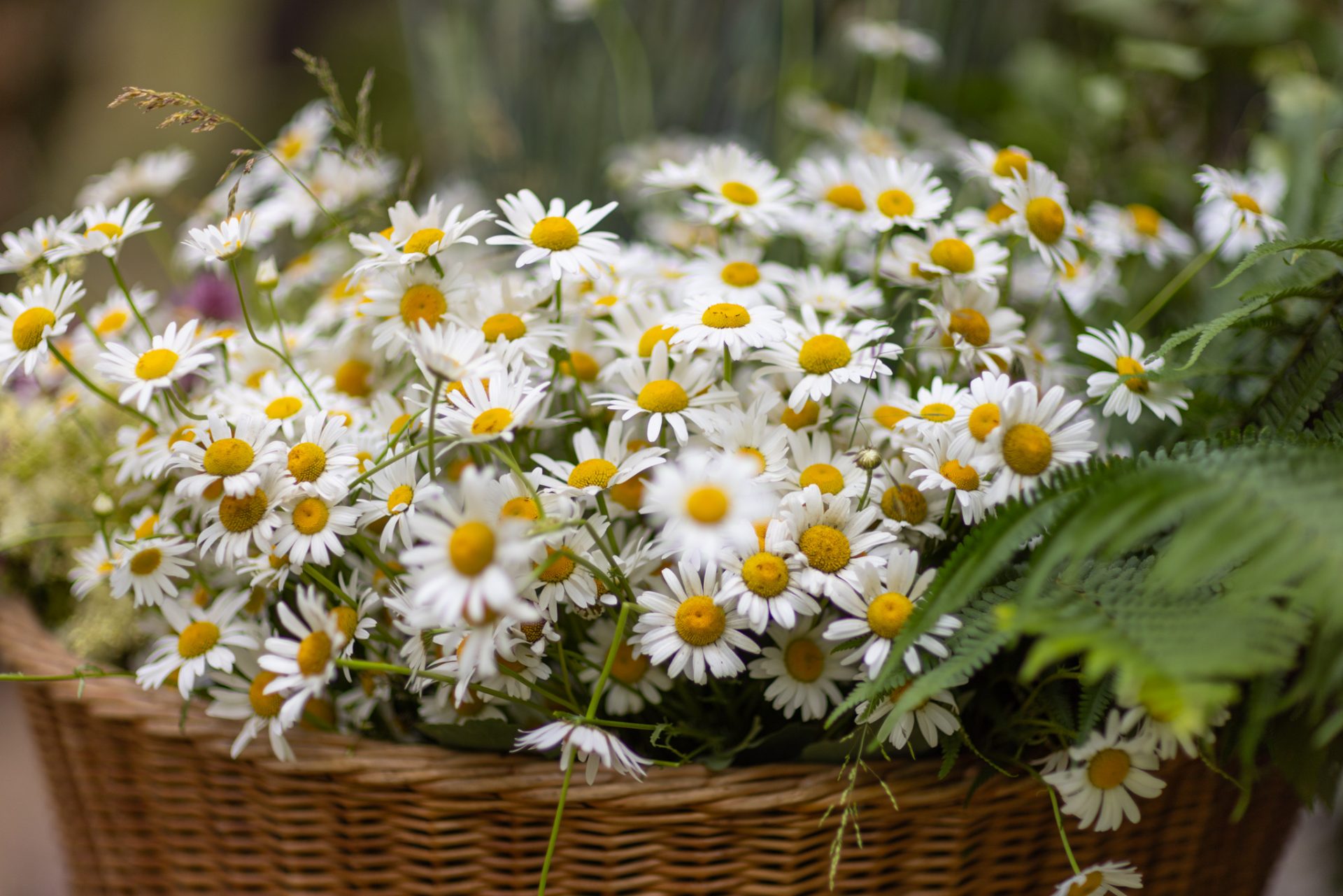
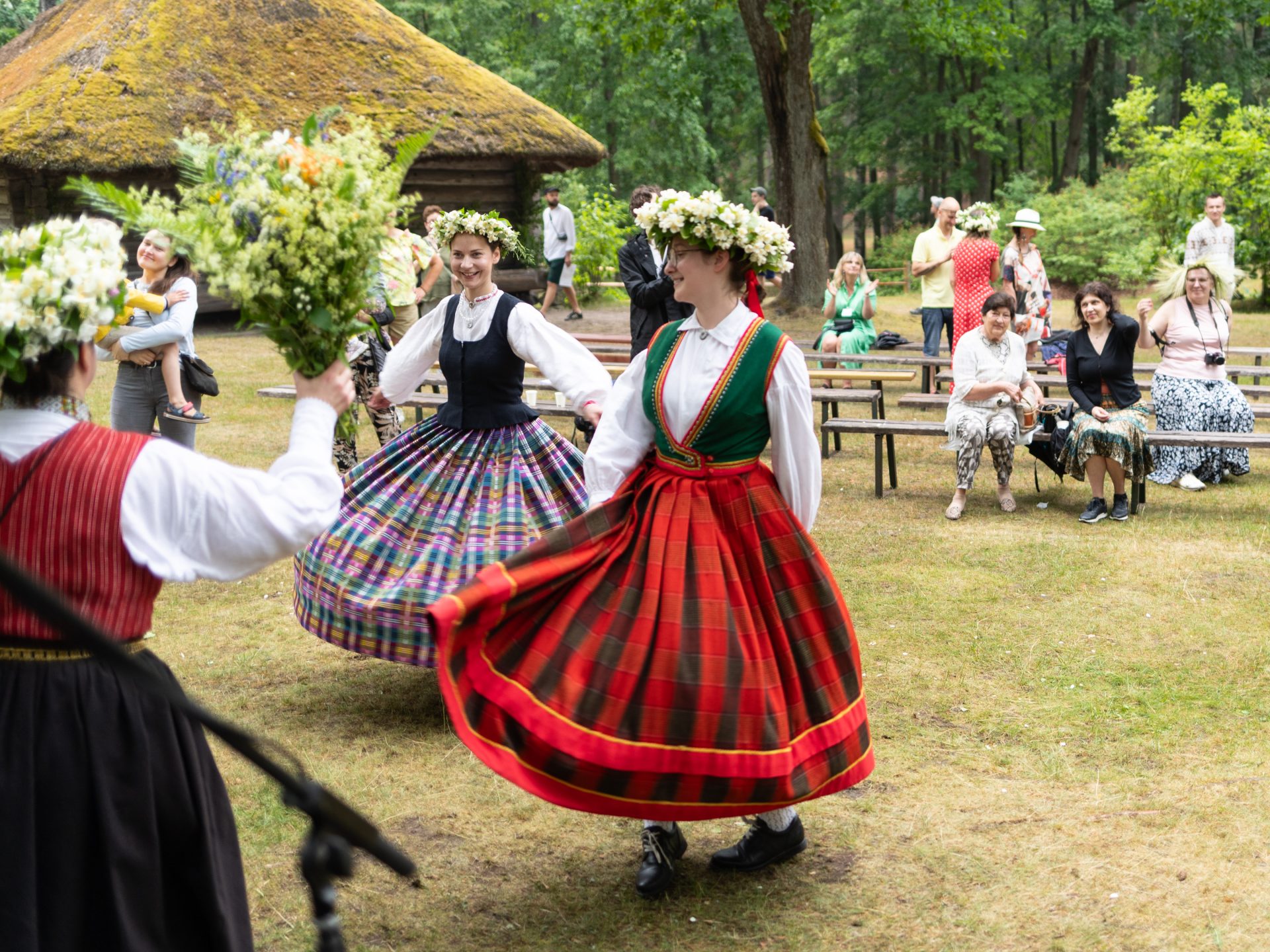
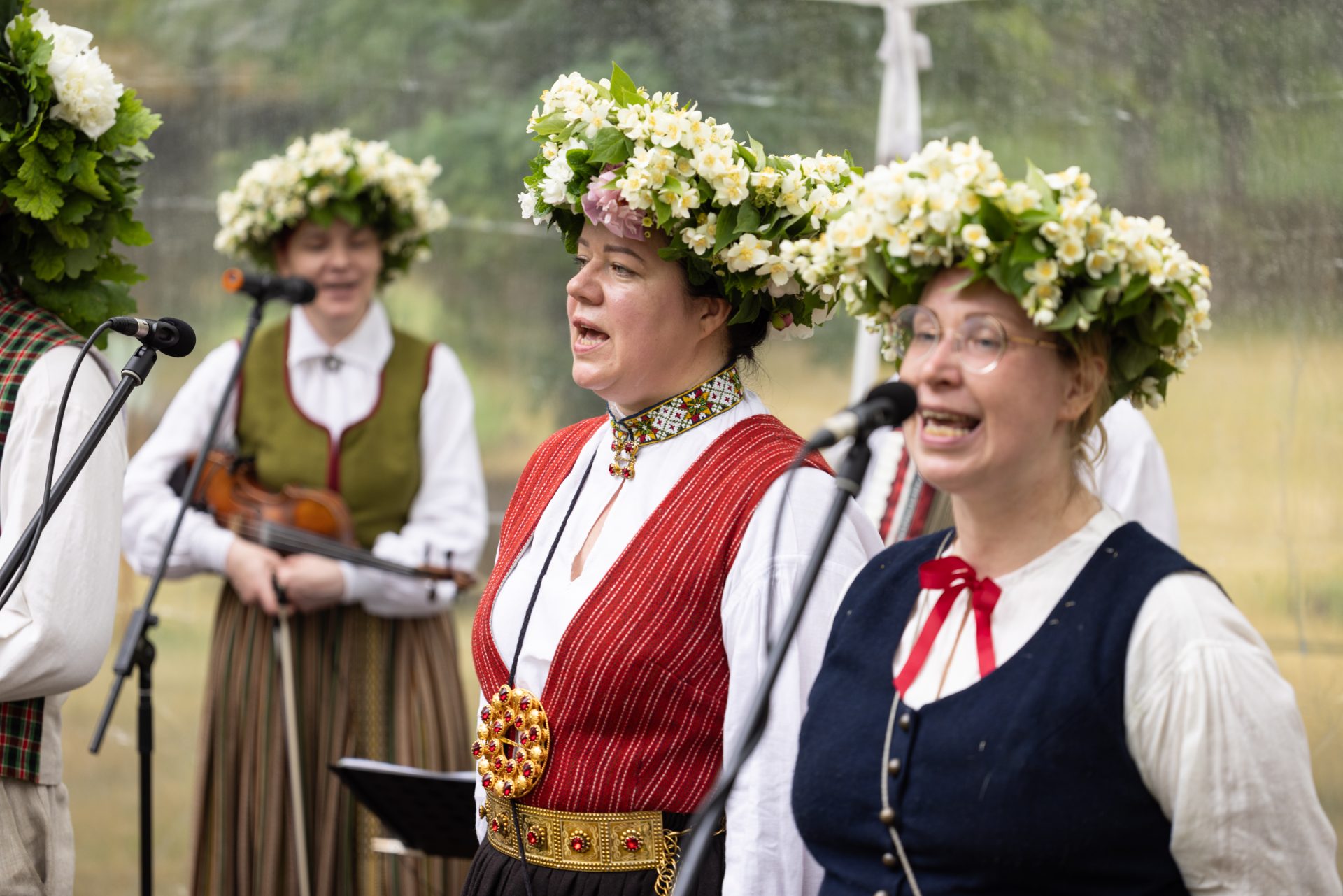
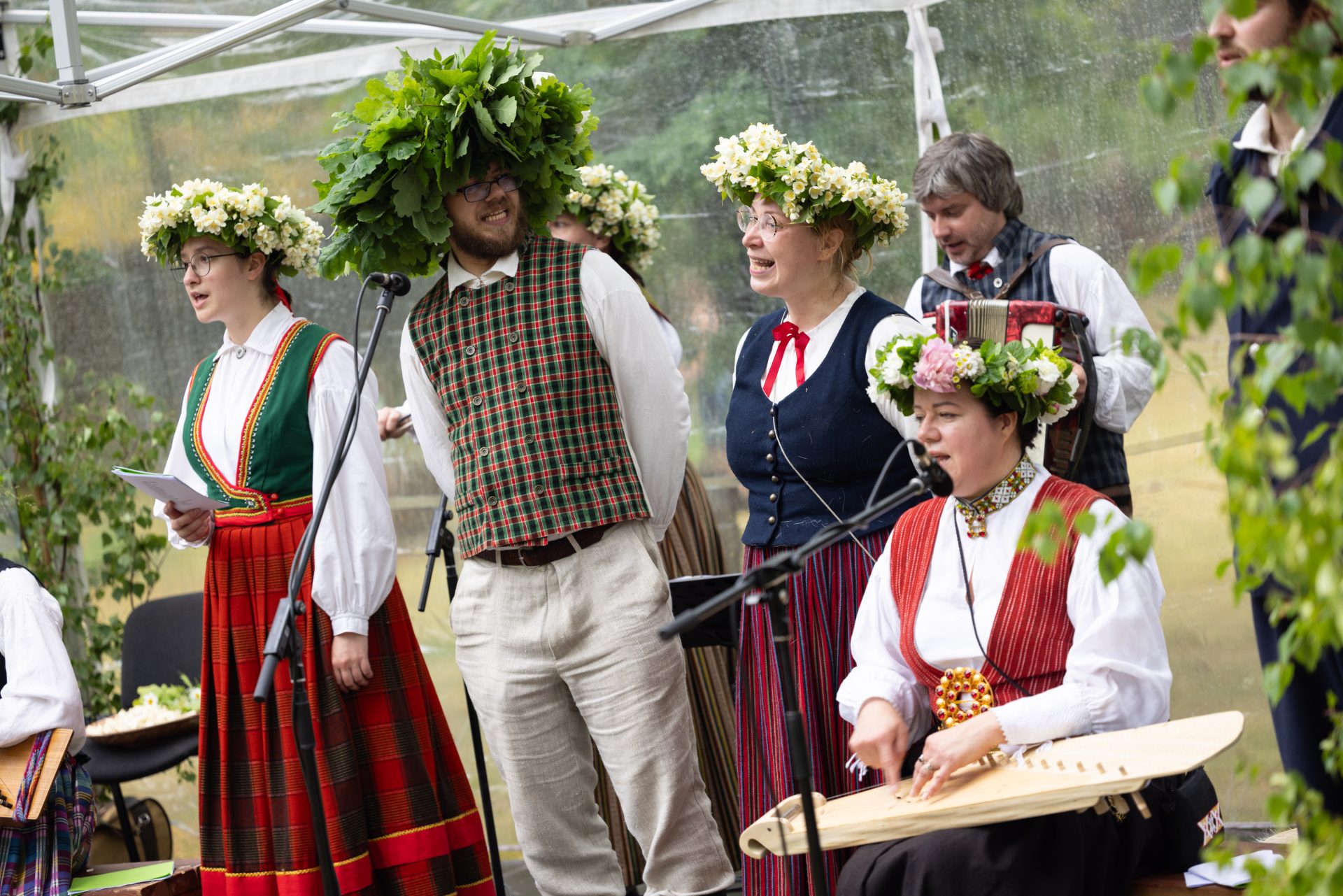
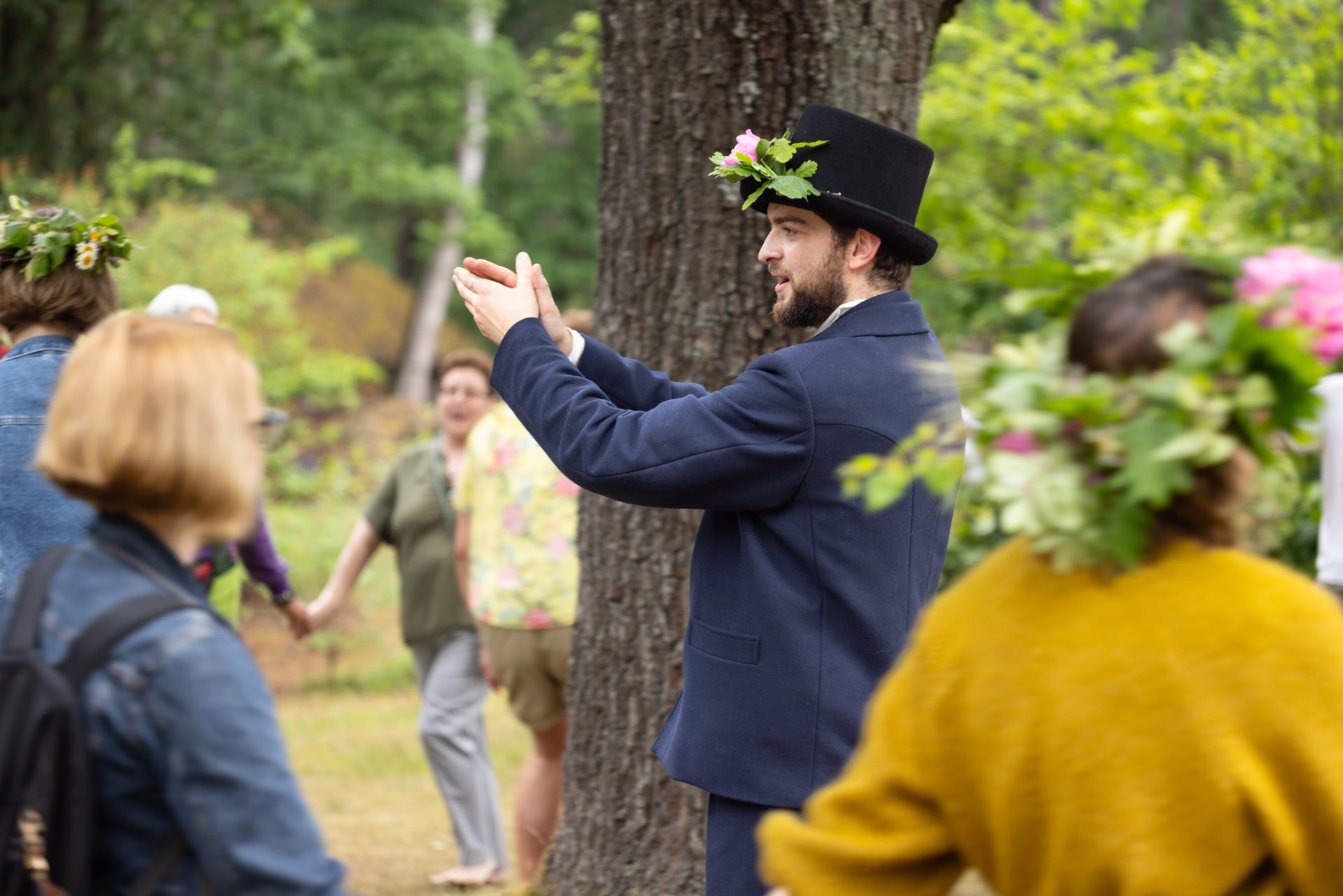
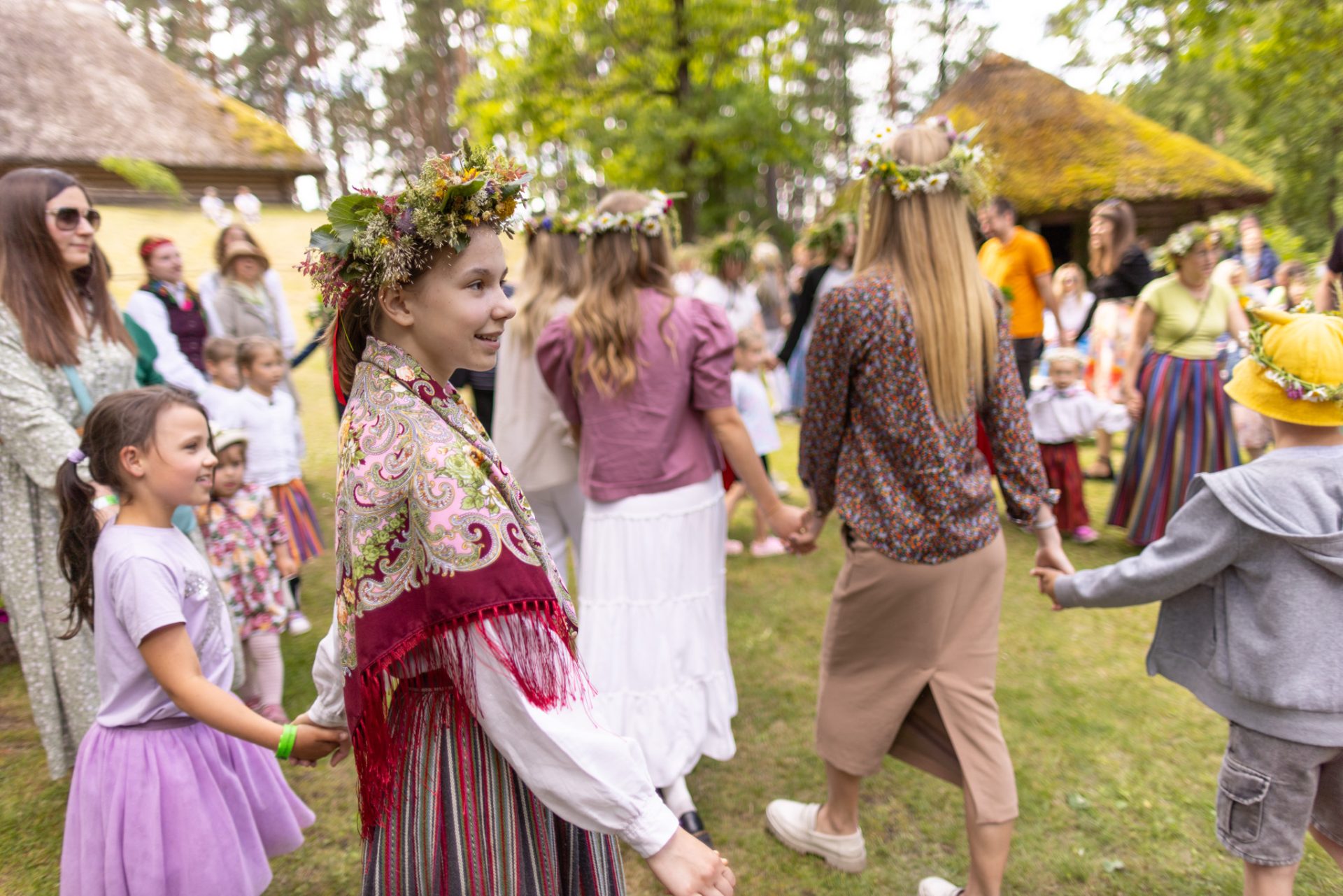
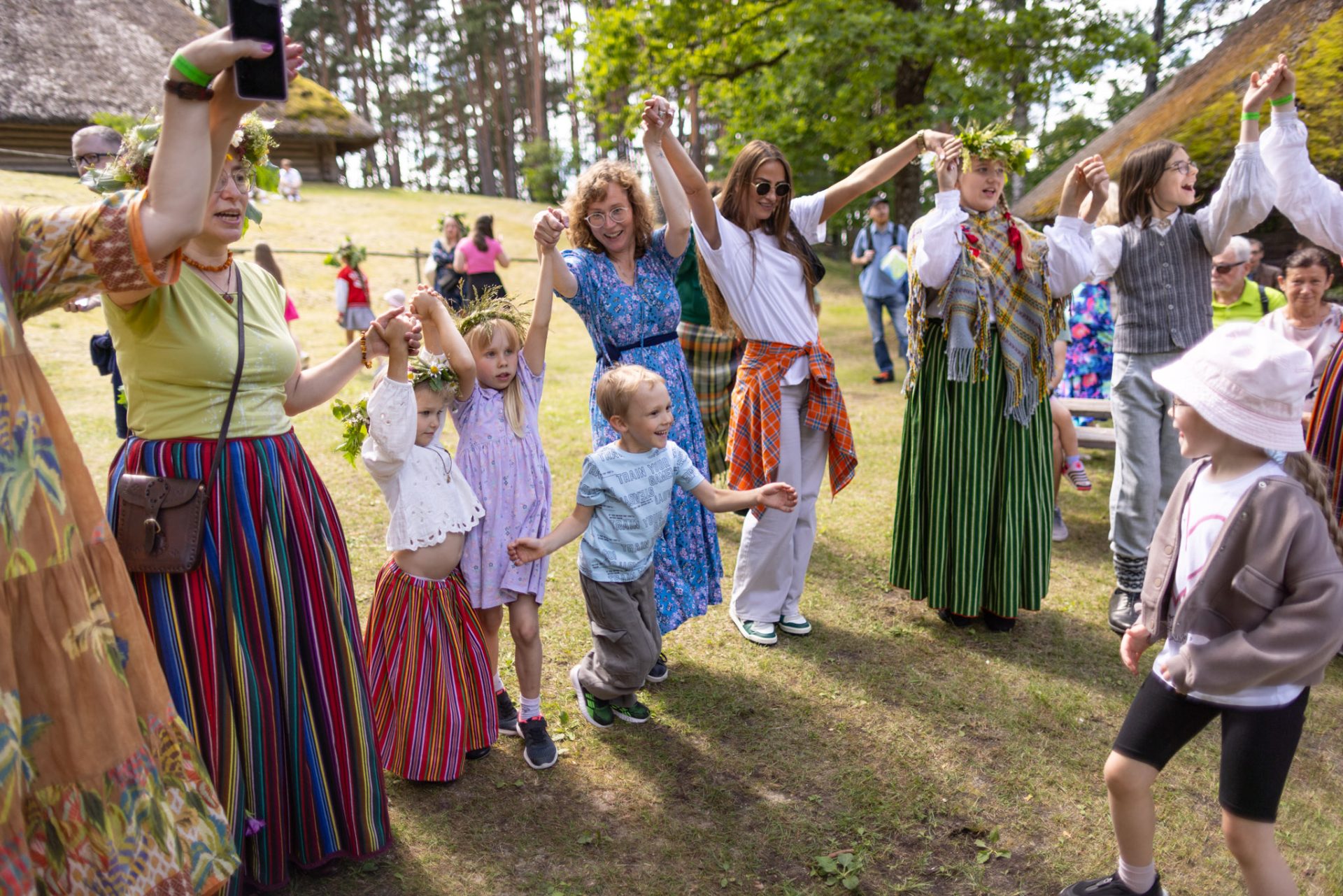
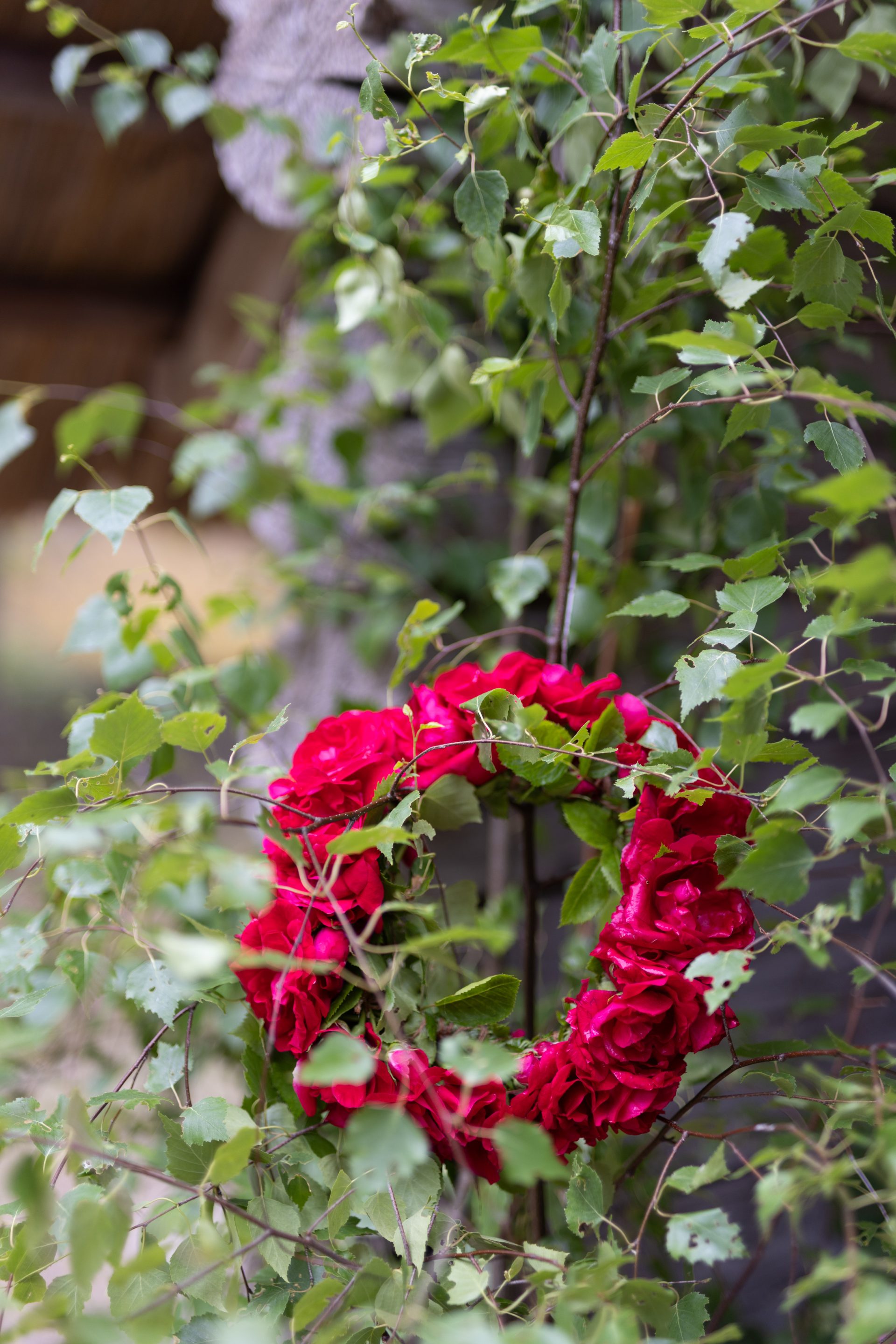
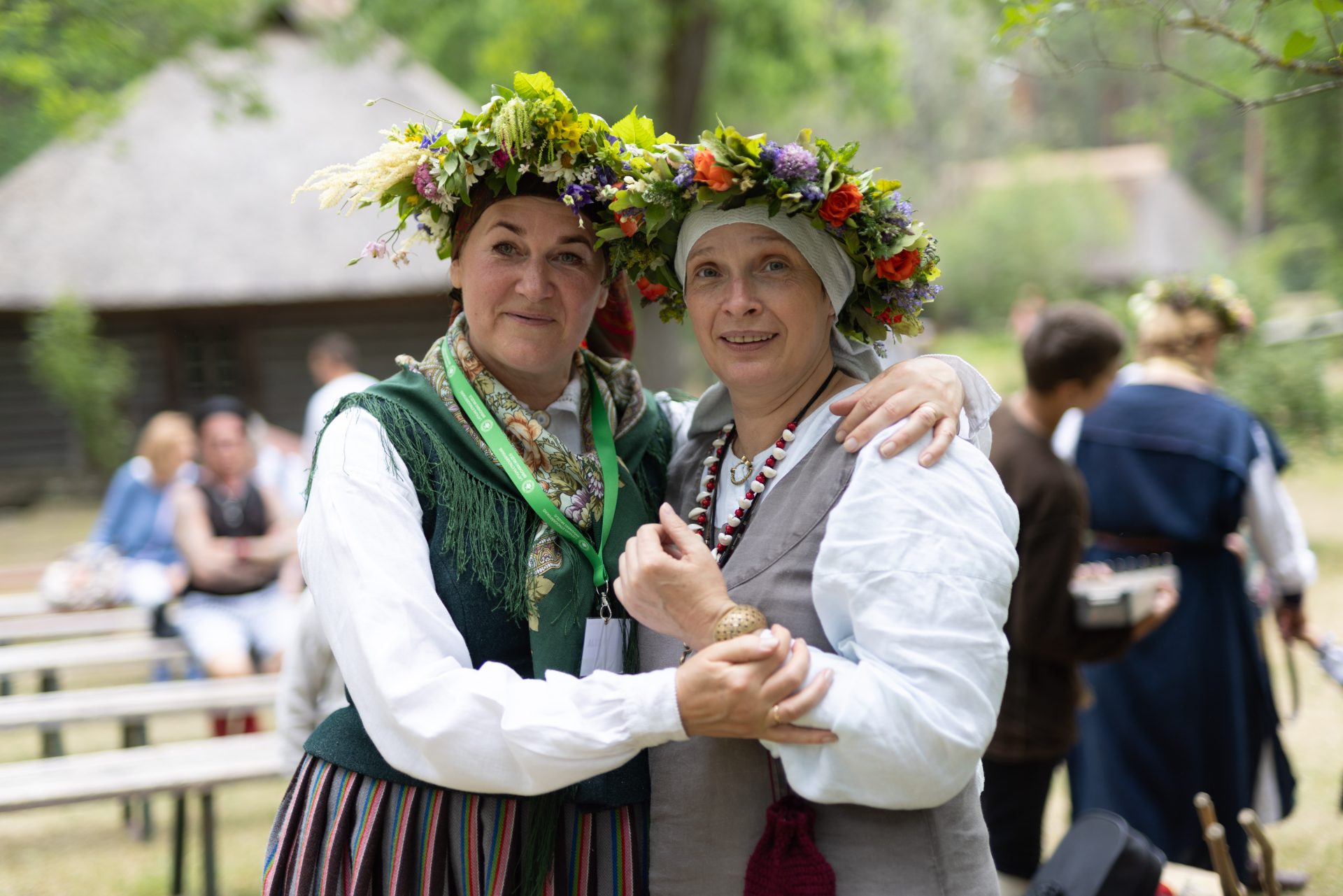
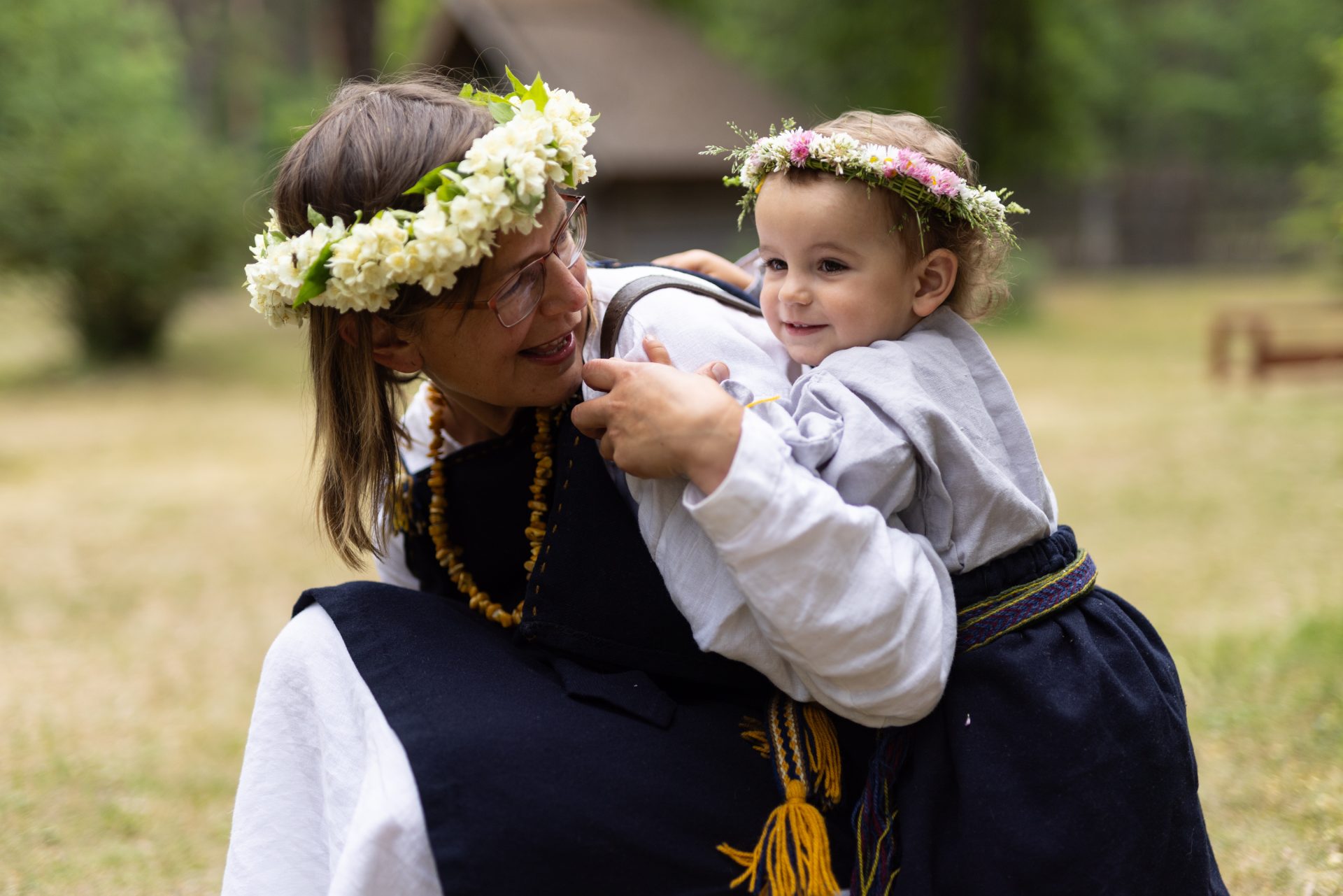
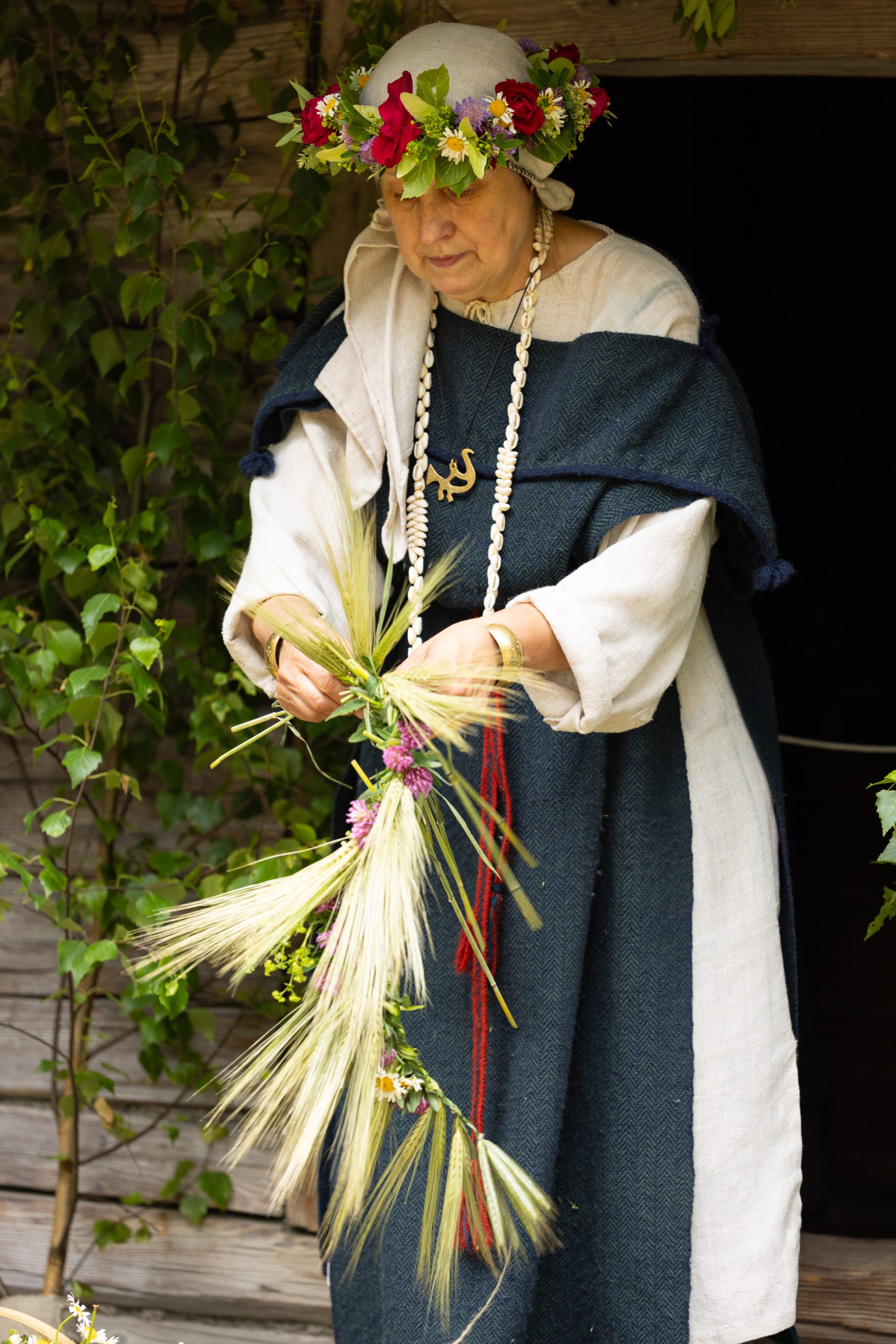
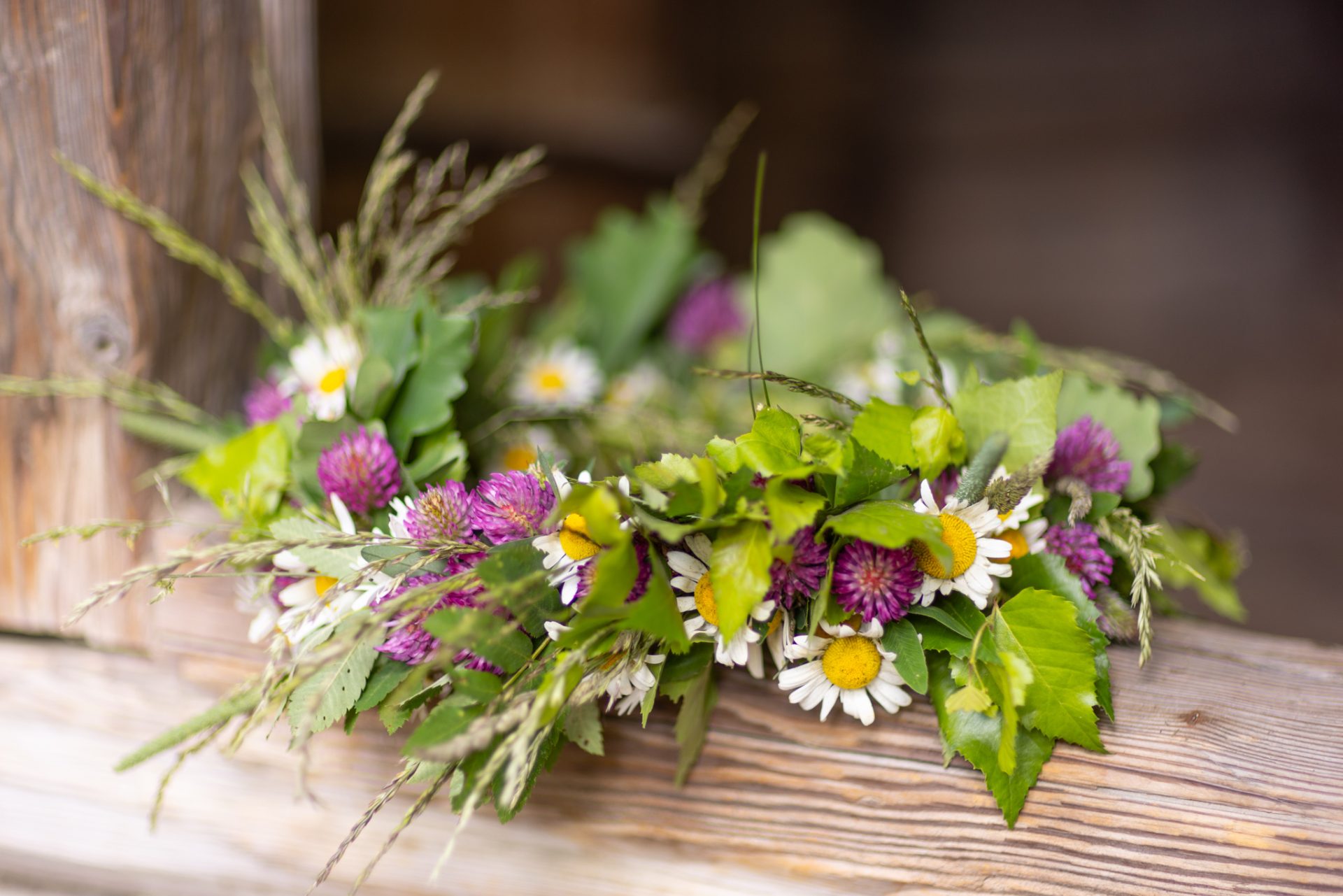
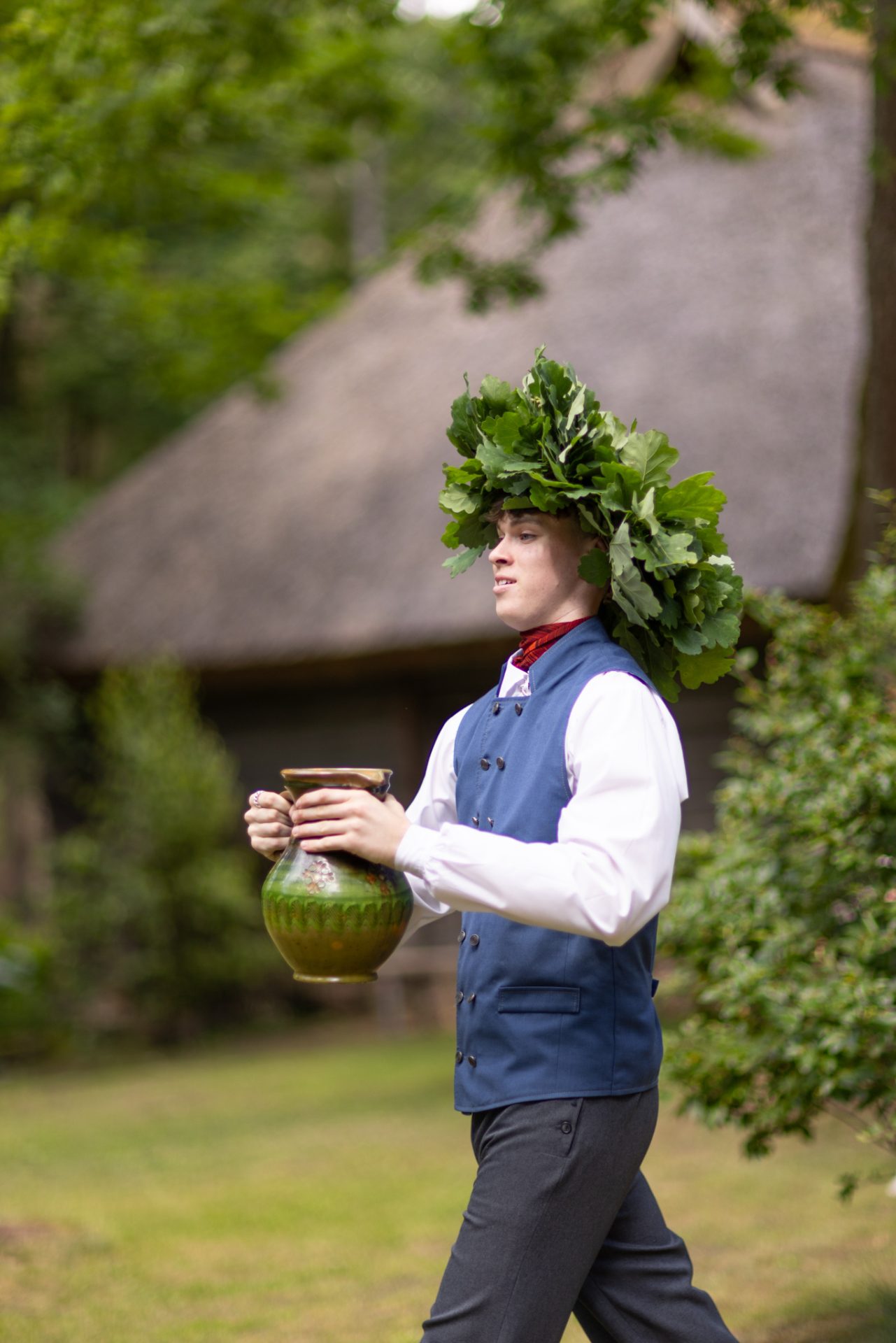
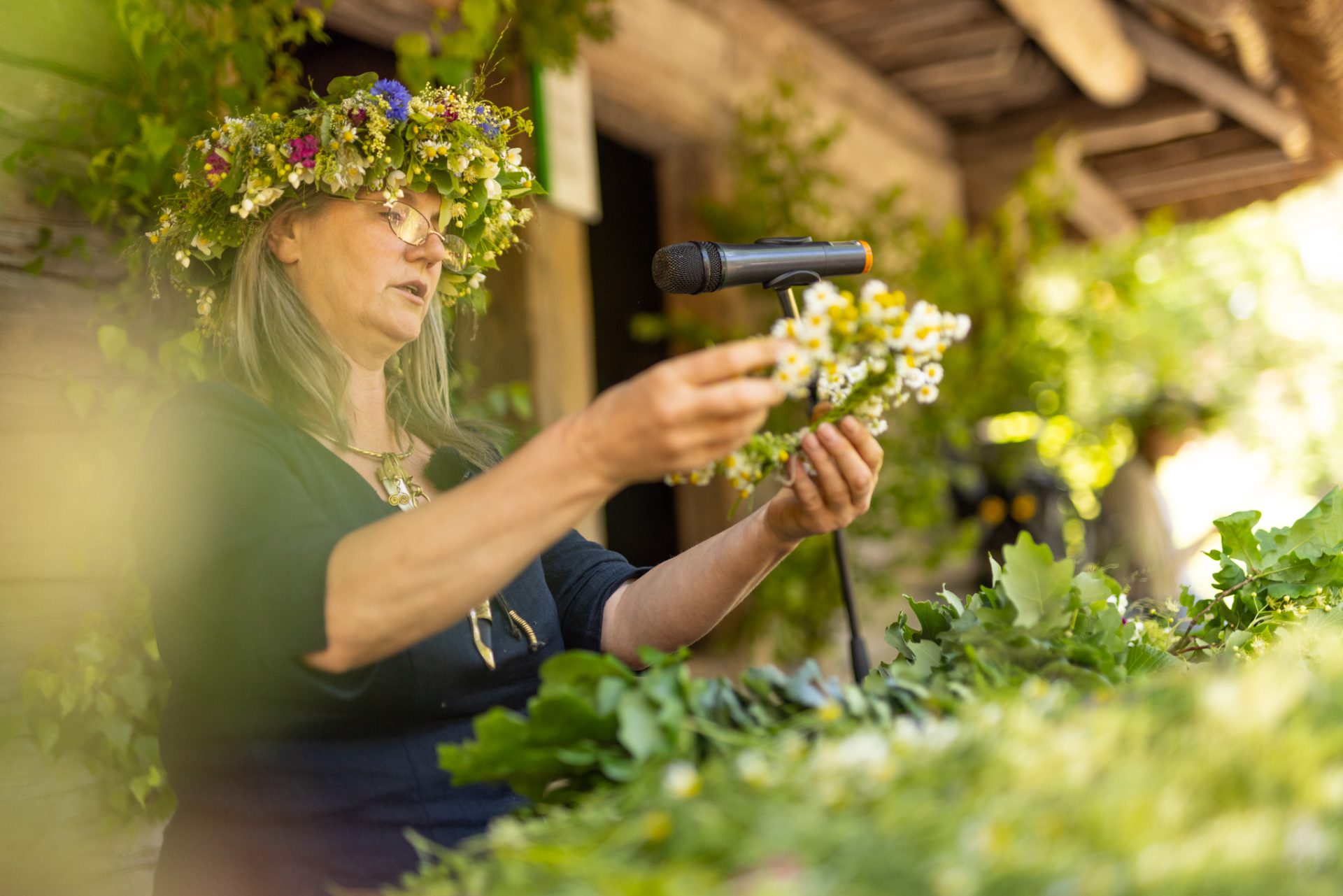
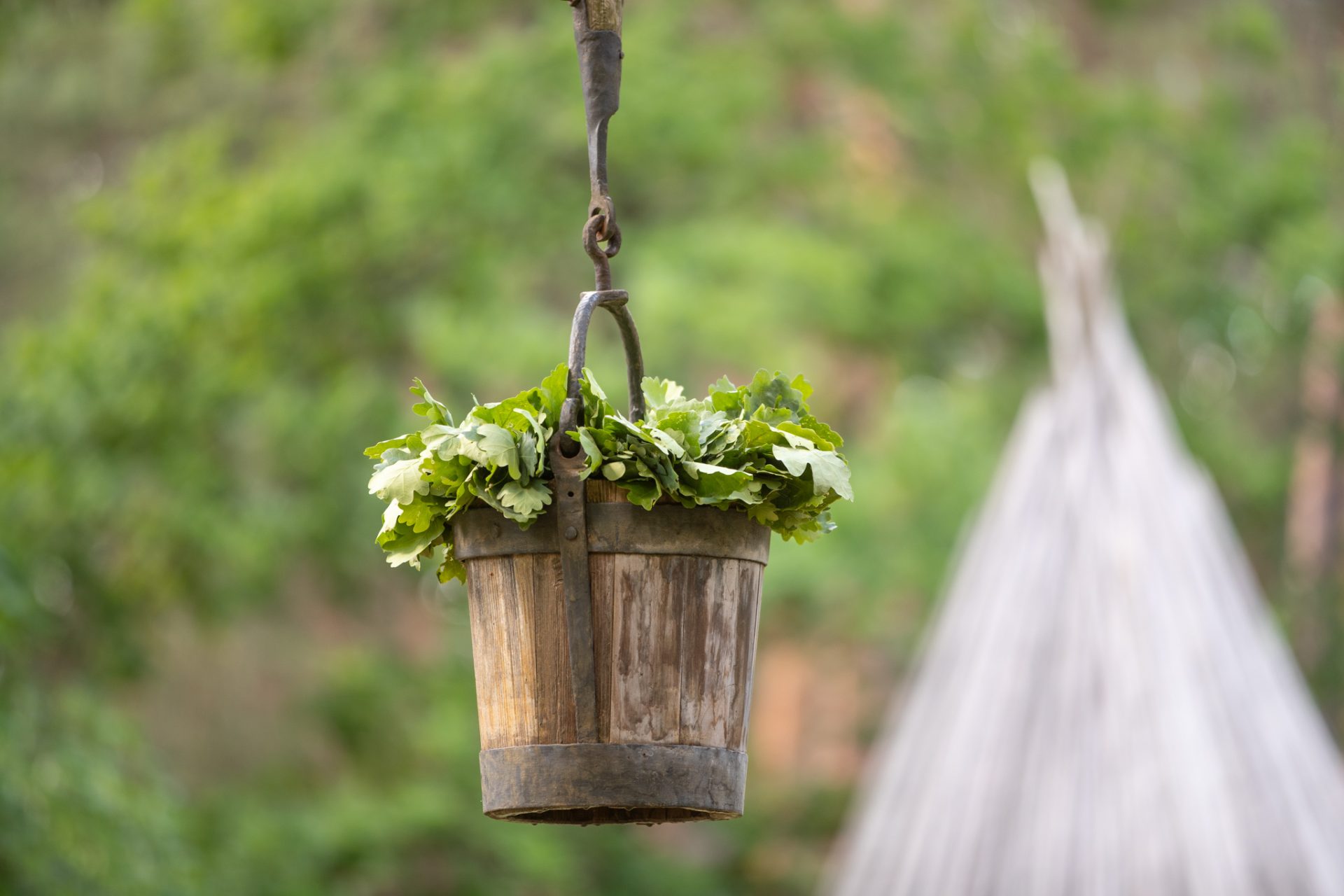
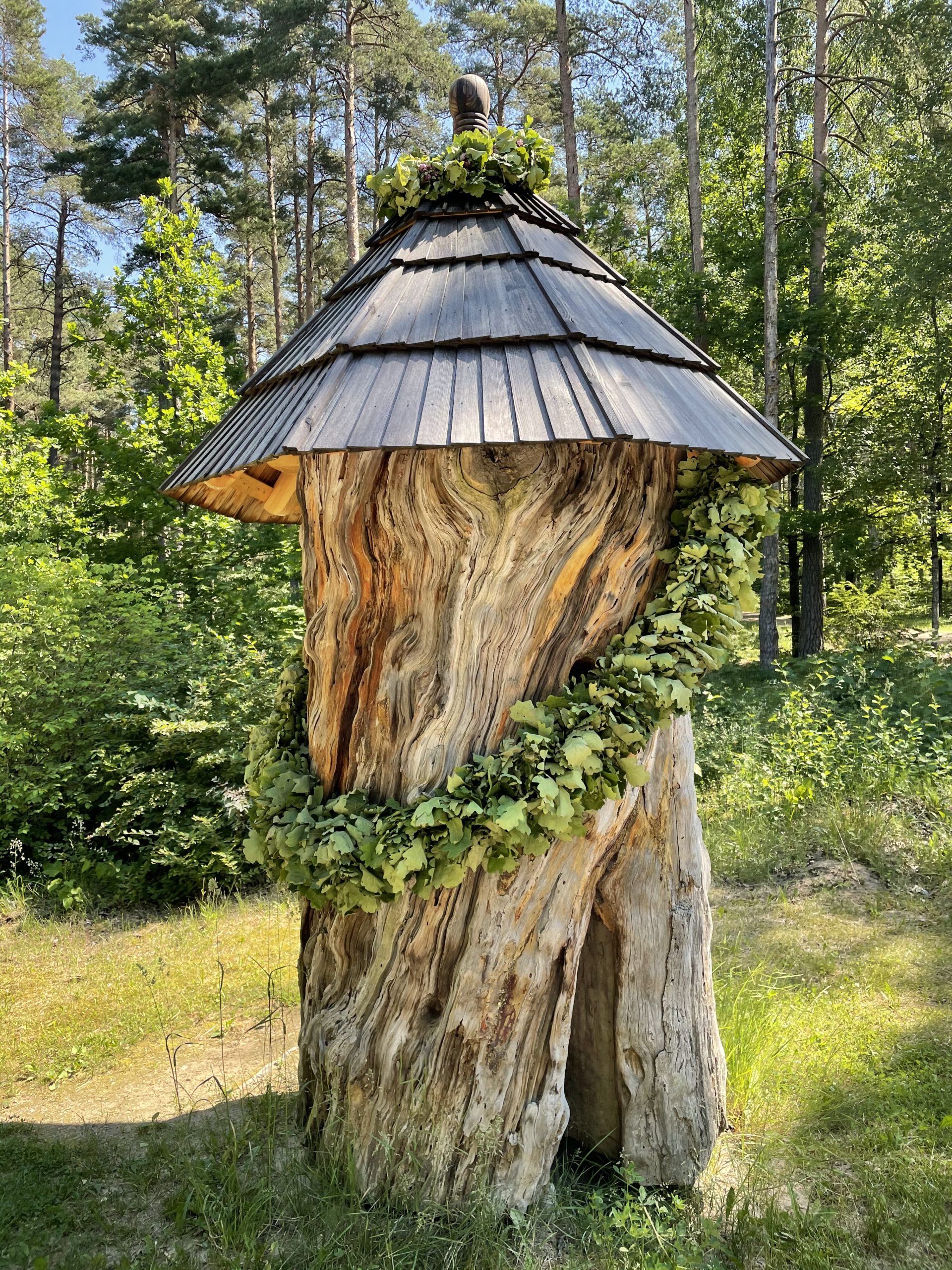
In the afternoon, the women sit together, singing songs and weaving wreaths. Daisies, red clover, buttercups, and hedge bedstraw are among the favorites. Some also add fragrant peonies, jasmine, or whatever else the season has offered—the richer and more colorful the wreath, the more fortunate the year ahead. Oak leaves are braided into sturdy crowns for husbands, sons, partners, and friends.
Meanwhile, the men, including the host, Jāņa tēvs, are busy elsewhere. They gather logs and firewood in the forest for the two bonfires that will become the heart of the celebration. One will be used for the fire ritual, while the other, the Jāņuguns or pūdelis, is placed on higher ground, visible from afar. It will burn throughout the night, carrying the light until the first rays of sunrise.
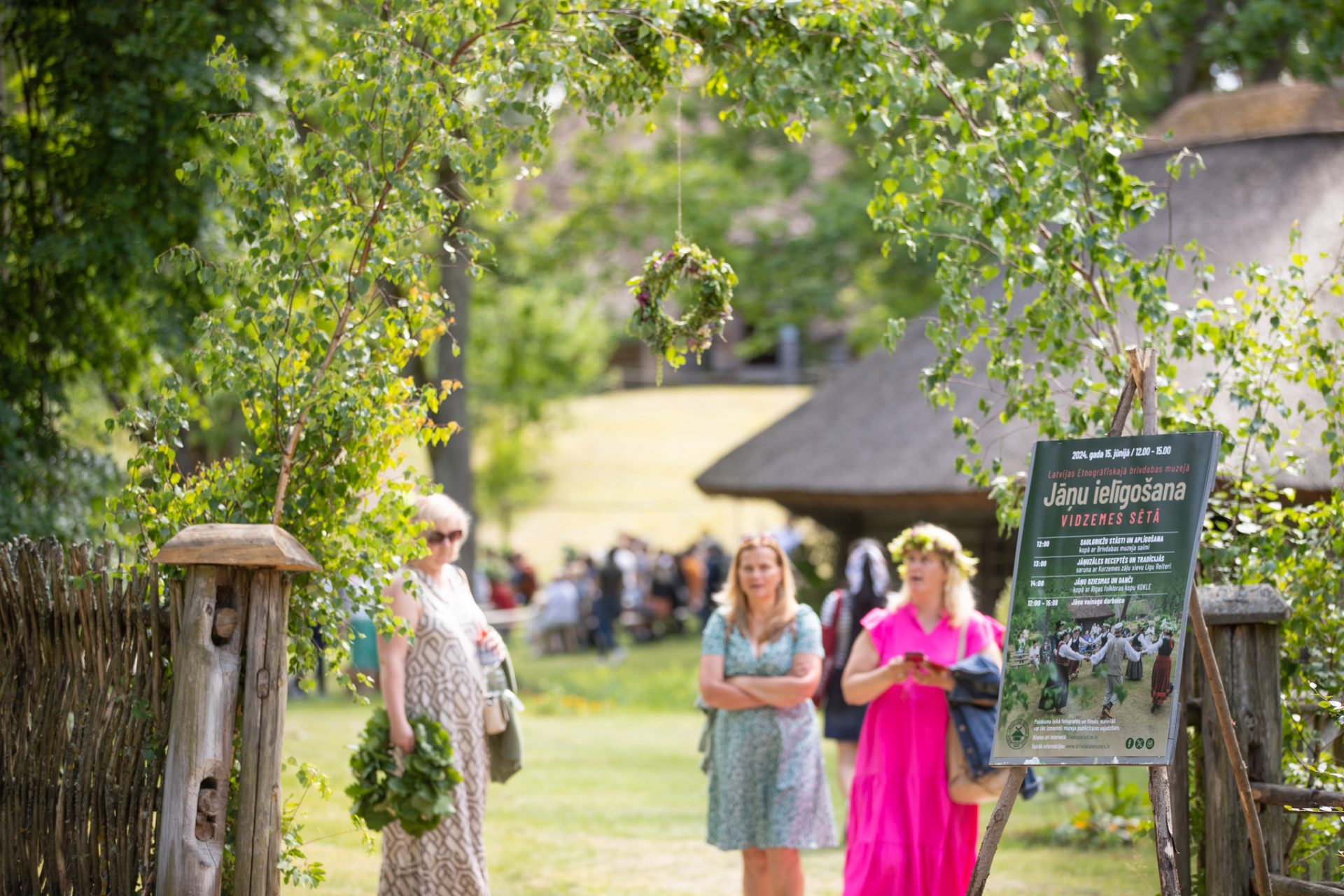
The men also use freshly cut birch branches to weave three gates — one marking the entrance to the celebration grounds, another facing the sunset, and a third facing the sunrise. Larger branches are transformed into torches using burlap and melted candle wax.